


Sterling silver can leave green marks on your skin, usually because copper in the alloy reacts with sweat and moisture. A green mark alone does not mean your jewelry is fake. What matters is whether the discoloration is on your skin, on the jewelry, or both. Knowing the difference helps you clean it properly, reduce repeat staining, and decide whether the piece needs a jeweler’s attention.
If you are comparing pieces before buying, browse bracelets with sterling-silver components and read the metal details for each design.
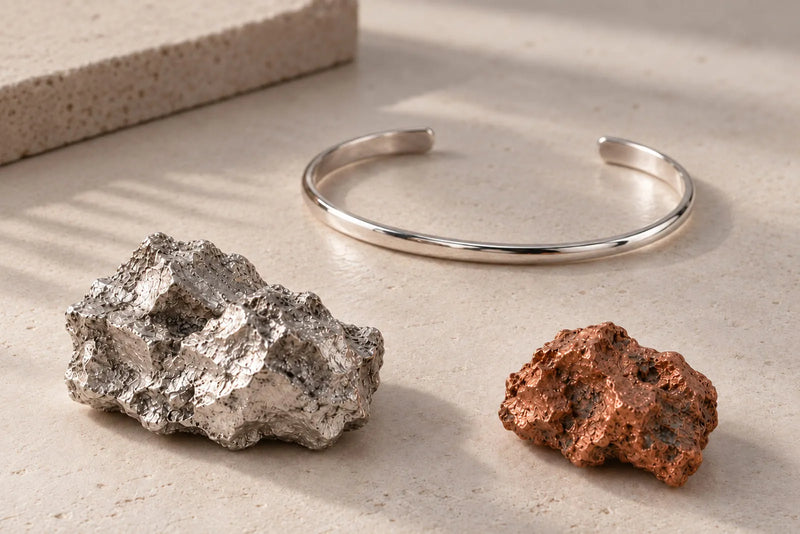
The Pinna Bracelet comes in silver-plated alloy and sterling silver versions. They can look similar on the wrist, so check which metal you have before choosing how to clean it.

PINNA BRACELET
Why does sterling silver turn your skin green?
Sterling silver contains 92.5% silver, with the remaining 7.5% made up of other metals, commonly copper. That is where the 925 stamp comes from. The added metals make silver stronger and more practical for jewelry.
Copper can react with its surroundings and form colored compounds that transfer onto your skin. Sweat, moisture, and residue from products you wear can contribute to the conditions that allow this to happen.
You might notice a mark beneath a ring after a warm afternoon or under a bracelet you wore while exercising. Another person might wear a similar piece without noticing anything. Neither experience tells you the silver content of the jewelry.
Is my sterling silver real if it turns skin green?
It can be. Genuine sterling silver may contain copper, so green staining does not automatically point to fake jewelry. Silver-plated pieces can also leave marks if their underlying metal contains copper and becomes exposed. If you see a coppery patch near a clasp, check for silver plating worn through to the base metal.
The stain cannot distinguish between those possibilities.
Start with the product description. Does it say sterling silver, silver-plated, or simply silver-colored? Those terms describe different things. A bracelet might also combine sterling silver details with other materials, so read beyond the product name.
A 925 stamp is a useful clue, but it is still a claim about the material. If you doubt a piece’s authenticity, ask the seller for more information or have a qualified jeweler assess it. Scratching the surface or trying household acid tests can damage the jewelry without giving you a reliable answer.
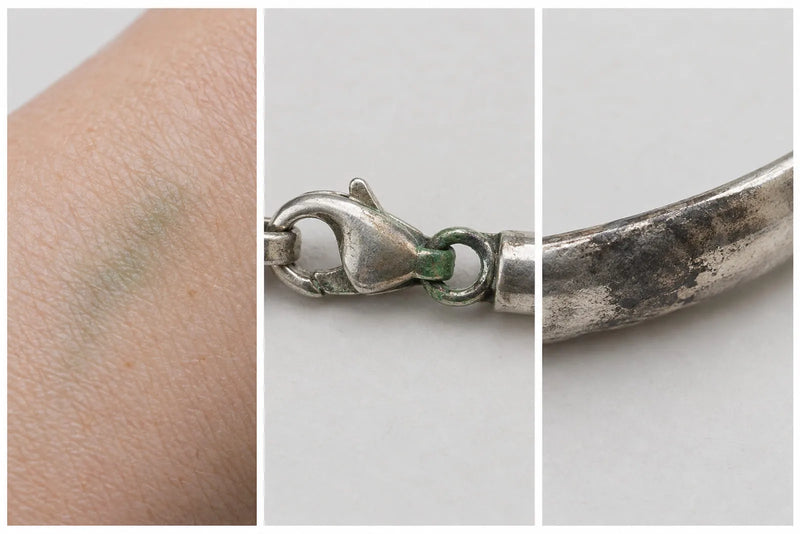
Green skin, green buildup, and dark tarnish need different care
Before cleaning anything, take off the jewelry and look at both surfaces.
| What you see | What it may mean | What to do first |
|---|---|---|
| A green mark on your skin | Copper compounds have transferred from the jewelry | Gently wash the skin |
| Green residue on a clasp, joint, or surface | Copper-related corrosion products or trapped cleaning residue | Check the material and care instructions |
| A gray, brown, or black film on silver | Tarnish | Use care appropriate to the silver’s finish |
| Redness, itching, or a rash | Possible irritation or contact allergy | Stop wearing the piece |
Ordinary silver tarnish develops through reactions with sulfur-containing substances in the environment. It can darken a bracelet even while it sits unworn in a drawer.
Green residue on the jewelry deserves a closer look. It can collect around joints or in areas where cleaning products were not fully removed. Adding more polish is not always the right response, especially if you do not know what the piece is made from.
A skin stain also does not tell you whether an allergy is present. If the area is itchy, sore, or inflamed, give your skin a break from the jewelry. Seek medical advice if symptoms persist or keep returning.
How to clean sterling silver that has turned green
First decide what you are trying to clean: your skin or the jewelry. Even with a homemade jewelry cleaner without harsh ingredients, keep the mixture away from your skin, and check the piece’s construction before getting it wet.
If the green mark is on your skin
Remove the jewelry and gently wash the area with mild soap and water. A surface stain will often come away without much effort.
Avoid scrubbing harder if it does not disappear immediately. Toothpaste, acidic mixtures, and jewelry polish are unnecessary for cleaning your skin and may irritate it. If the area feels uncomfortable, leave the jewelry off while you work out what caused the problem.
If the residue is on the jewelry
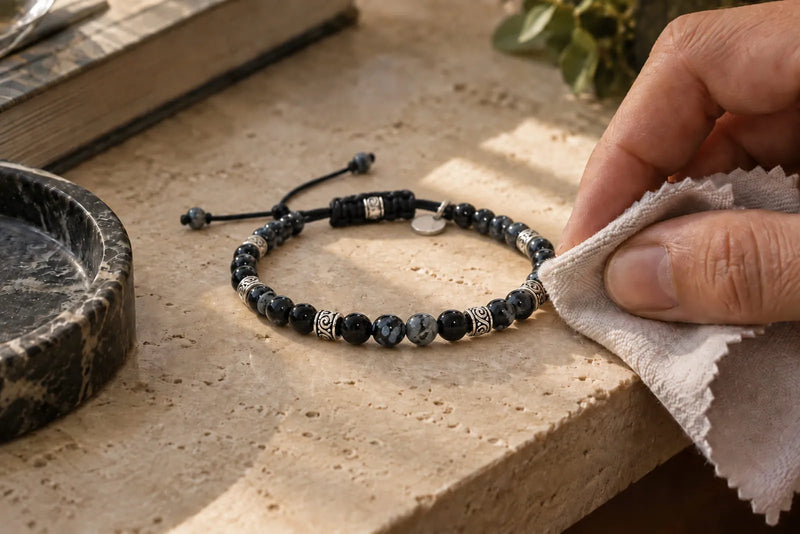
Begin with a soft, dry cloth. This can remove loose surface residue and lets you see what remains.
For confirmed plain, uncoated sterling silver, follow the maker’s washing instructions. Where washing is permitted, use a gentle method for cleaning silver jewelry, remove the cleaning residue, and dry the piece thoroughly. A suitable silver polishing cloth can help with light tarnish, provided the finish allows polishing.

PINNA SILVER BRACELET
The NOSTRAS SILVER BRACELET is the sterling silver version of that minimal cuff design. A soft, dry cloth is a sensible first step when it needs attention, and its care instructions say to remove it before swimming or showering.
Silver polishing cloths are mildly abrasive. Use them carefully around plating and deliberately darkened details, where polishing may change the intended appearance.
A beaded bracelet with silver spacers needs different handling from a plain metal cuff. Avoid soaking cords, stones, glued components, or mixed-material pieces unless their care instructions specifically allow it. Persistent green buildup, particularly around a clasp or joint, is a good reason to ask a jeweler before going further.
How to keep sterling silver from turning your skin green
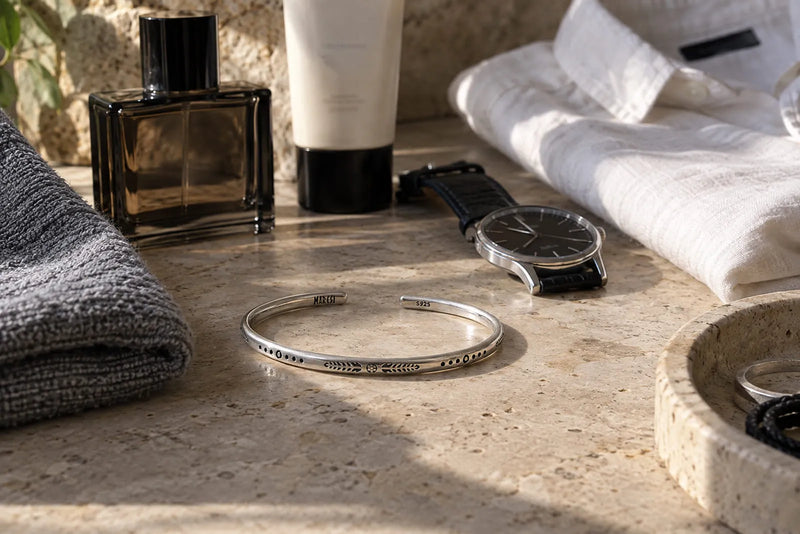
You can reduce the conditions that encourage staining, although no care routine guarantees that every piece will leave every wearer’s skin unchanged.
A few habits are easy to work into daily wear:
- Let lotion, sunscreen, and fragrance dry before putting jewelry on. This helps avoid trapping fresh product beneath a ring or bracelet.
- Remove jewelry before exercise, swimming, showering, and household cleaning. These activities expose it to moisture, residue, or cleaning chemicals.
- Wipe it after wearing. Use a soft, dry cloth, paying attention to the surfaces that touched your skin.
- Store it dry. Let the piece dry fully before placing it in a pouch or box.
- Follow the instructions for its finish. Polished silver, oxidized silver, and plated surfaces do not all need the same treatment.
If a mark keeps appearing in one small spot, inspect the part of the jewelry that rests there. A clasp or decorative component may use a different material from the main body.
Clear nail polish is a common suggestion for creating a barrier, but it introduces a coating that needs its own maintenance and removal. Before painting a piece you care about, ask the seller or a jeweler whether a different finish or professional treatment would be appropriate.
What kind of silver doesn’t turn green?
Fine silver contains very little alloy metal, while rhodium plating puts another metal between sterling silver and your skin. Those differences may reduce copper contact, but the construction and condition of the complete piece still matter.
| Silver type | What to know | The tradeoff |
|---|---|---|
| Fine silver, commonly marked 999 | Contains approximately 99.9% silver and very little alloy metal | Softer than sterling and more easily bent or scratched |
| Sterling silver, commonly marked 925 | Contains 92.5% silver, with other metals commonly including copper | Can tarnish and may leave skin marks |
| Rhodium-plated sterling silver | Has a rhodium surface over a sterling silver base | The coating can wear and may eventually need renewal |
| Silver-plated jewelry | Has a layer of silver over another metal | Wear can expose the base metal; its composition matters |
If you are choosing between metals, compare sterling silver and stainless steel before deciding which care routine fits your habits.
Maresi’s silver bracelet collection includes different constructions and finishes. Choose the shape you like, then check the material details and care requirements for that specific piece before deciding how to clean or wear it.
Ask what the jewelry is made from underneath any coating. “Silver” in a product name does not necessarily describe every component.
Also keep staining and skin sensitivity separate when shopping. A finish that reduces contact with one metal does not establish that the whole piece is suitable for someone with a known allergy. In that situation, ask about all components that touch the skin.
The Pinna Bracelet is a reminder to check the metal option on a listing. Two cuffs with the same shape can have different finishes.
PINNA BRACELET
Can you shower with sterling silver?
It is better to remove sterling silver before showering. An accidental splash does not automatically ruin it, but repeated exposure introduces soap, shampoo, moisture, and residue that can affect its appearance and upkeep. If you forgot once, see what to do with a wet sterling silver bracelet before deciding whether to rinse it.
The bracelet’s other materials matter too. Cord, stones, coatings, and decorative components may need more protection than the silver itself.
If a piece gets wet, follow these bracelet care instructions and dry it gently and thoroughly. Do not put a damp bracelet straight into a closed pouch. Maresi bracelets should be removed before showering and swimming.
A few other questions about silver and skin marks
Does 925 sterling silver turn green on everyone?
No. Some people notice staining and others do not. The alloy, finish, moisture exposure, products on the skin, and wearing conditions can all affect the result. A friend’s experience with a similar bracelet is not a reliable test of how yours will behave.
Will sterling silver turn your finger green more than your wrist?
Either area can develop a mark where jewelry touches the skin. Rings can hold moisture and soap beneath the band, while bracelets may sit against sweaty skin during activity. Check the conditions around the piece rather than assuming the location identifies the cause.
Does real silver turn green if it is expensive?
Price does not prevent a copper-containing alloy from reacting. A more expensive sterling silver piece may offer different workmanship, construction, or finishing, but its price alone cannot promise stain-free wear.
If your favorite piece leaves a mark, start by checking its materials and adjusting its care. A washable stain may be manageable. Recurring irritation or stubborn buildup deserves closer attention before you put it back on.
-

$25.99 USD
View product -

$49.99 USD
View product -

$25.99 USD
View product


Save 20%
Coordinated pieces, ready to wear.

Up to 15%
Pick any 3 or 5 bracelets.
From a customer
★★★★★
“Still wearing it two months later.”
Nick Verified · Sicily set


