


A red string bracelet can represent a wish for protection or good fortune, a religious custom, or a connection between people. Its meaning depends on the tradition and the person wearing it. The color alone cannot tell you which story applies.
Two bracelets can look almost identical and mean very different things. One may have been tied during a ceremony; another may be a gift from a friend. That distinction matters when looking at red bracelets in different materials, from a plain length of thread to braided cord and beads.
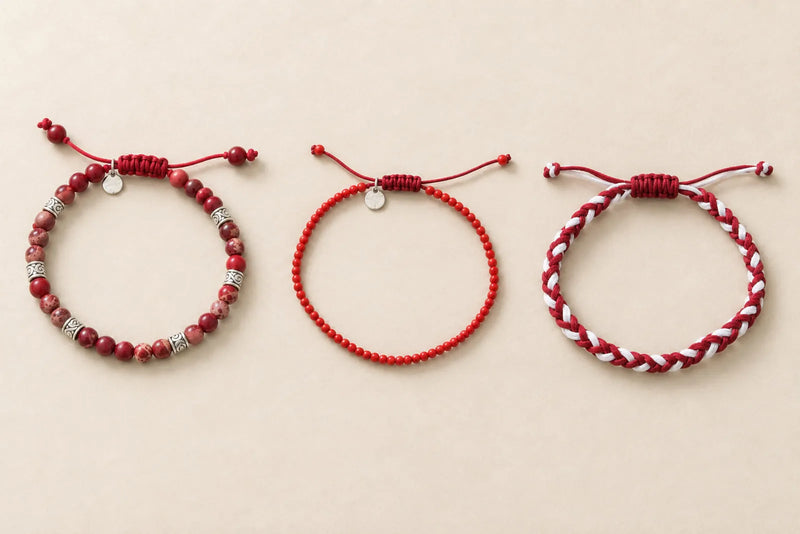
The Rosso Clay Bracelet, for example, pairs red clay beads with adjustable cord. It shares the color of a simple red thread but has a different construction. A personal association with it belongs to the wearer.

ROSSO CLAY BRACELET
Red string bracelet traditions and their meanings
There is no single origin story that explains every red bracelet. Several traditions use red thread, and their customs should be understood separately.
Jewish folk customs and the Kabbalah association
Red string bracelets are often associated with Kabbalah, but Jewish folk customs surrounding red strings have a less straightforward history. My Jewish Learning describes their connection with ayin hara, the evil eye, while noting uncertain origins and differing rabbinic attitudes toward the practice.
Some wearers tie the string around the left wrist as part of that protective symbolism. The practice is not a requirement shared by all Jewish people. The wider history of the evil eye as a cultural symbol helps put this custom in context.
A red string bracelet with an evil eye adds an eye-shaped bead or charm to the cord. The thread and the eye motif are separate design elements, even when a wearer associates both with protective symbolism. A plain red thread does not need an eye charm to carry personal or cultural meaning, and adding one does not establish a particular religious practice.
Hindu mauli or kalava threads
In Hindu ceremonies, a cotton thread called mauli or kalava may be tied around the wrist. It can be red or combine red with saffron-colored thread. The Craft Revival Trust documents the ceremonial use of mauli threads, including winding the cord around the wrist before knotting it.
Here, the thread's significance comes from the religious occasion and the customs followed by its participants.
The Chinese red thread of fate
In Chinese folklore, a red thread connects people destined to marry. Taipei's Longshan Temple describes Yue Lao and the red thread of fate: the matchmaking deity joins destined partners with a red thread.
That story helps explain the romantic association of red-thread jewelry. It does not mean that any red bracelet marks an engagement or guarantees a relationship. A gift can borrow the image of connection without following a religious custom.
Buddhist blessing threads
Some Buddhist communities give threads during religious observances. Mahamevnawa describes blessing threads at a Sri Lankan monastery as cords chanted over by monks or nuns, which may then be tied around a visitor's wrist.
This is one ceremonial use of thread, with its own context. There is no single meaning, color, or wrist rule that applies across Buddhism.
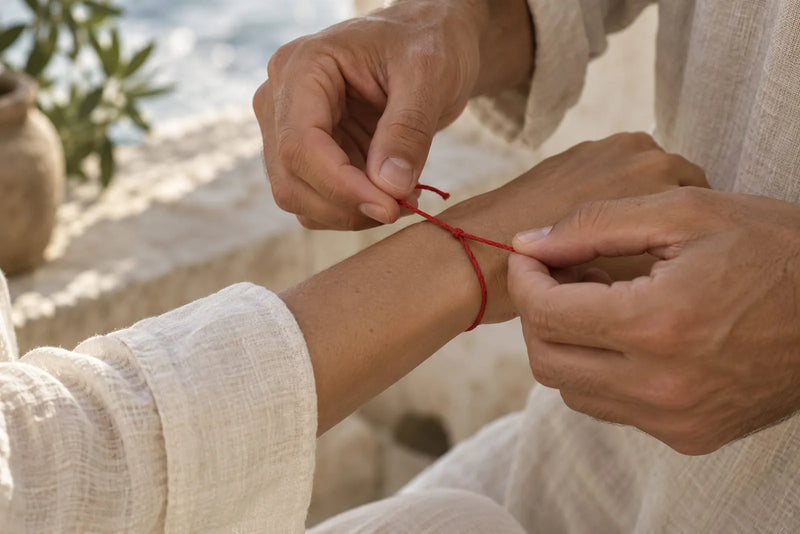
What a red bracelet can mean between two people
A gift can give a bracelet a meaning that no general guide can supply. Between friends, it might recall years of shared routines. Between partners, it might mark an anniversary or a stretch of time spent apart.
The Amiore Friendship Bracelet uses red-and-white braided cord. In a friendship gift, that woven design can become a reminder of the person who gave it, without needing a ceremony or a fixed interpretation of the colors.

AMIORE FRIENDSHIP BRACELET
If you are giving one, a short note will say more than a list of supposed bracelet meanings. “For all our Sunday coffee walks” makes the connection clear. So does “A little reminder while we're living in different cities.” Neither asks the recipient to adopt a belief they may not share.
When choosing bracelet gifts for close friends, think about what the other person enjoys wearing. A shared color or similar design can be enough; the bracelets do not have to match exactly.
If the gift comes from a particular religious tradition, explain that context. A ceremonial thread and a casual friendship bracelet can both be meaningful, but they arrive with different stories.
Should a red string bracelet go on the left or right wrist?
There is no wrist choice that applies to every red string bracelet. The left wrist appears in some Jewish red-string customs. Other ceremonial traditions have their own conventions, so instructions from one practice should not be applied automatically to another.
For a thread received at a religious ceremony, ask the person who gave or tied it. They can explain the custom that actually applies, including whether there are expectations about removing or replacing it. That is more useful than a general online rule based only on the bracelet's color.
For everyday jewelry, choose the wrist where it feels comfortable. If a bracelet catches while you write, use a mouse, or reach into a bag, try the other side. If you wear a watch, check whether the two sit comfortably together or rub against each other.
You can wear a red bracelet without assigning a meaning to the wrist.
A plain red thread and a modern bracelet are different designs
“Red string bracelet” can describe a thin knotted thread, a braided cord bracelet, or a beaded design held together with cord. Those differences affect how it looks and feels. They do not, by themselves, tell you whether it has a ceremonial background.
The Rosso Shamballa Clay Bracelet combines red clay beads with Shamballa-style cord construction. Its row of rounded beads gives it a different shape and texture from a thin thread. The style name describes the design, without establishing a ceremonial background.

ROSSO SHAMBALLA CLAY BRACELET
When choosing an everyday bracelet, look at the details you will actually notice: the thickness of the cord, the feel of the beads, and whether the closure is easy to adjust. A slim thread sits differently from a row of beads, especially beside a watch or under a fitted sleeve.
Follow the care instructions for the particular material. A bracelet made with cord and clay beads can have different care needs from a plain cotton thread. If the bracelet matters to you because it was a gift, taking care of it is a practical way to keep that reminder around.
What does it mean when a red string bracelet breaks?
A broken thread does not have one agreed meaning across cultures. It can simply be the result of wear: repeated rubbing, a snag, or a knot that has loosened. Fraying tells you something about the condition of the cord, not what will happen next in your life.
If the thread came from a ceremony, ask the relevant community about replacing or keeping it. Customs differ. Mahamevnawa, for example, says that a blessing thread falling off has no negative significance and can be replaced on another visit to the monastery.
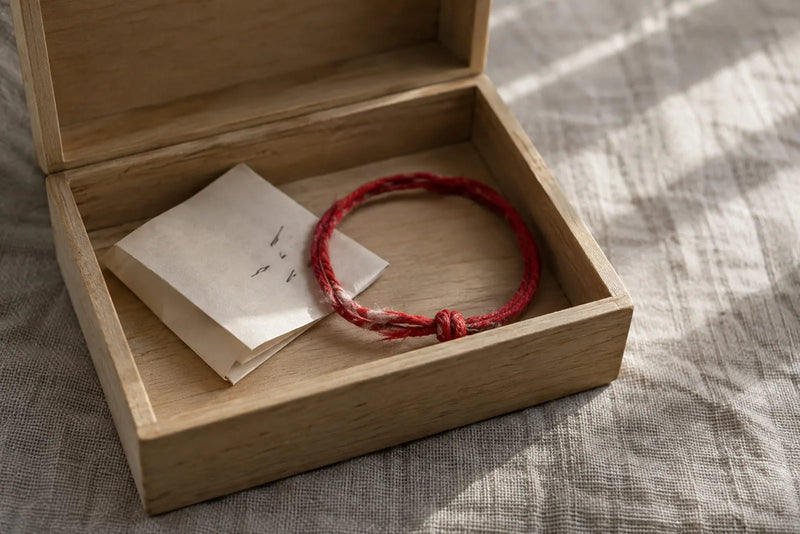
For a bracelet worn as a personal keepsake, you decide what to do. You might save the old thread with the note that came with it, repair the bracelet if its construction allows, or replace it. You do not have to wait for ordinary jewelry to fall apart before removing it for comfort or following its care instructions.
The memory attached to a bracelet can last longer than the cord. Replacing a worn thread does not erase the friend, occasion, or promise you associate with it.
FAQs about red string bracelet meaning
What does a red string bracelet mean in Mexican culture?
Some Mexican families associate red bracelets with the folk belief in mal de ojo, or the evil eye. A cultural resource from the National Center for Hearing Assessment and Management describes red bracelets in Mexican folk customs, including designs with an ojo de venado seed. Beliefs and bracelet designs vary between families.
Is a red string bracelet lucky?
Some people wear one as a symbol of good luck or a wish for good fortune. That is an association they give the bracelet, rather than a result the bracelet can promise. It may also be a familiar family custom or a reminder of someone's good wishes.
What does a red string bracelet mean in Catholicism or Christianity?
A plain red cord does not tell you which Christian practice, if any, a wearer follows. Someone may use it as a personal reminder to pray. The Catholic teaching on superstition cautions against assigning magical efficacy to religious practices. Christian prayer rope bracelets are a distinct example: their knots can help someone remember the Jesus Prayer.
Is there a prayer for a red string bracelet?
Some tying customs include a prayer. For example, the Kabbalah Centre red-string instructions name the Ben Porat Prayer and also discuss Ana BeKo'ach. These references belong to that particular practice. A red cord worn as everyday jewelry or a friendship gift does not come with a universal prayer requirement.
Can I wear a red string bracelet just because I like it?
Yes, an ordinary red cord bracelet can be a style choice. You do not need to give it a symbolic meaning. If a particular bracelet is presented as a ceremonial object, learn about that context and describe it accurately instead of assuming all red cords are interchangeable.
Who should tie a red string bracelet?
For a ceremonial thread, follow the custom of the community or person giving it. For a friendship bracelet or everyday cord design, you can tie or adjust it yourself, or ask someone to help. There is no single tying rule shared by every tradition that uses red thread.

Save 20%
Coordinated pieces, ready to wear.

Up to 15%
Pick any 3 or 5 bracelets.
From a customer
★★★★★
“Still wearing it two months later.”
Nick Verified · Sicily set


