


Colorful gemstones include red ruby, blue sapphire, green emerald, purple amethyst, and pink rose quartz. Some stones show several colors at once, such as ametrine and watermelon tourmaline. Others reveal flashes as they move or change color under different lighting. Choosing among them starts with deciding which kind of color you want to see.
For a wrist-level comparison, Maresi's stone bracelets across a wider color palette show how color and pattern work in small beads. Read each design's material description: a colorful bracelet can combine natural stone, treated material, glass, or manufactured beads.
Rhodonite Bracelet Silver offers one example of a patterned look, with polished pink rhodonite, dark veining, silver details, and an adjustable cord. The darker markings break up the pink, giving you a different effect from a bracelet made with evenly colored beads.

RHODONITE BRACELET SILVER
Gemstone colors and names at a glance
Use this gemstone colors chart as a starting point. The descriptions give familiar appearances, rather than every color a material can have. A gemstone name often covers a range of shades, and photographs cannot confirm identity or treatment.
| Gemstone | Colors to look for | What makes the appearance distinctive |
|---|---|---|
| Ruby | Red | A red variety of corundum, the mineral family that includes sapphire |
| Sapphire | Blue, pink, yellow, green, and other hues | The name covers far more than blue stones |
| Emerald | Green to bluish green | A green variety of beryl |
| Amethyst | Pale to deep purple | Purple quartz, often seen as a transparent faceted gem |
| Citrine | Pale yellow to brownish orange | A transparent quartz variety; much commercial material is heat-treated |
| Rose quartz | Very pale to deeper pink | Usually has a cloudy, translucent appearance |
| Rhodonite | Pink with dark markings | Pattern often contributes as much as the pink itself |
| Tourmaline | Many colors, sometimes within one crystal | Color zoning can produce distinct areas in a single stone |
| Ametrine | Purple and yellow | Amethyst and citrine colors together in quartz |
| Precious opal | Shifting flashes of different colors | Play-of-color, distinct from the stone's underlying body color |
| Labradorite | Multicolored flashes | An optical effect called labradorescence |
| Alexandrite | Bluish green to purplish red under different light sources | Color change rather than fixed contrasting bands |
| Tiger's eye | Golden brown | A silky band of reflected light called chatoyancy |
A color category is useful for browsing, but it does not identify a mineral. Ruby and sapphire belong to the same mineral species despite their different names. Amethyst, citrine, rose quartz, and ametrine are all quartz varieties, although they can look very different.
If one shade interests you more than the others, compare more shades of pink and their stone names, or look at the differences between familiar blue gems. Those narrower comparisons are more useful once you have a color in mind.
Why the colors of gems can look so different
Color can come from elements within a material, inclusions, or the way its structure interacts with light. Chromium gives ruby its red. In tourmaline, different coloring elements and other causes contribute to its wide range of hues. There is no single explanation that works for every gem.
It also helps to separate hue, tone, and saturation. Hue is the color family, such as green or purple. Tone describes how light or dark it looks. Saturation describes the strength of that color.
Two blue stones can therefore feel quite different: one pale and quiet, the other dark and intense. Neither description tells you which you will prefer beside a navy shirt or against your skin. Compare the actual stones in ordinary lighting rather than choosing from a color name alone.
Which gemstones show more than one color?
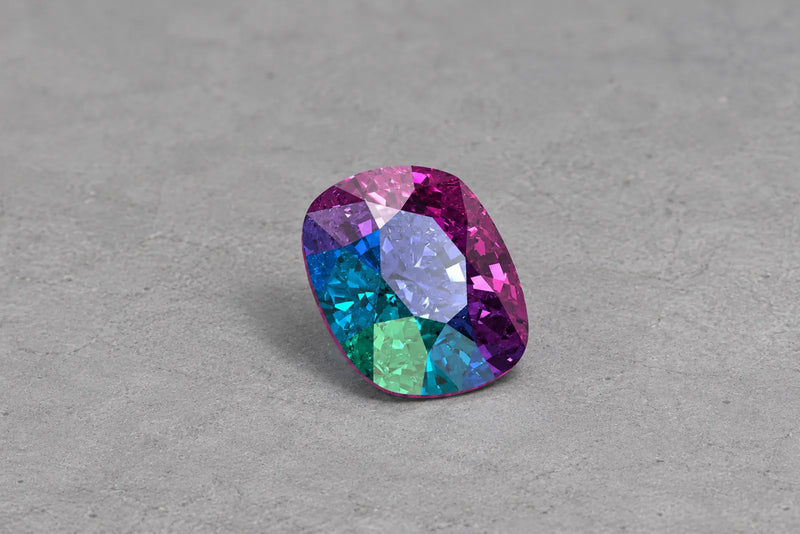
A multicolor gem can have separate areas of color, contrasting mineral markings, or an optical effect that becomes visible as you move it. These differences matter when comparing photographs. A fixed pink-and-green pattern will behave differently from a blue flash that appears only at certain angles.
Tourmaline and ametrine: color within the stone
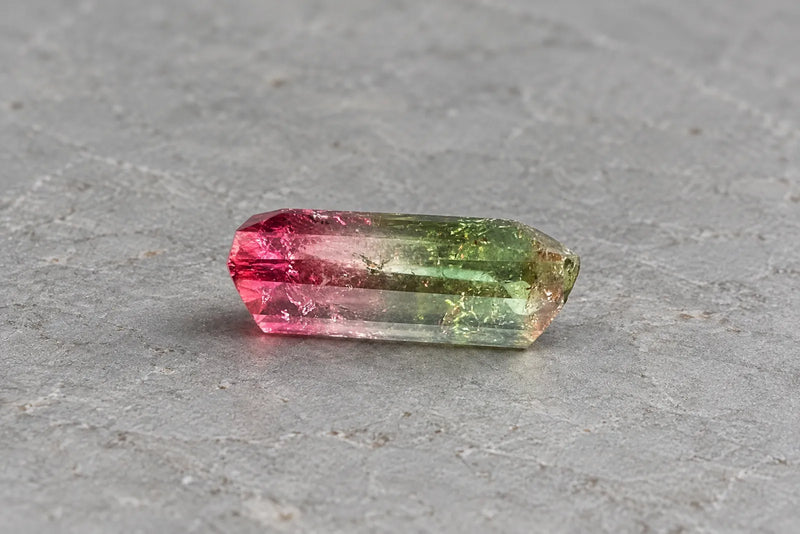
Tourmaline can show distinct color zones in one crystal. Watermelon tourmaline is a familiar example, with pink inside and green around the outside. How the crystal is sliced and cut affects which parts of that arrangement you see.
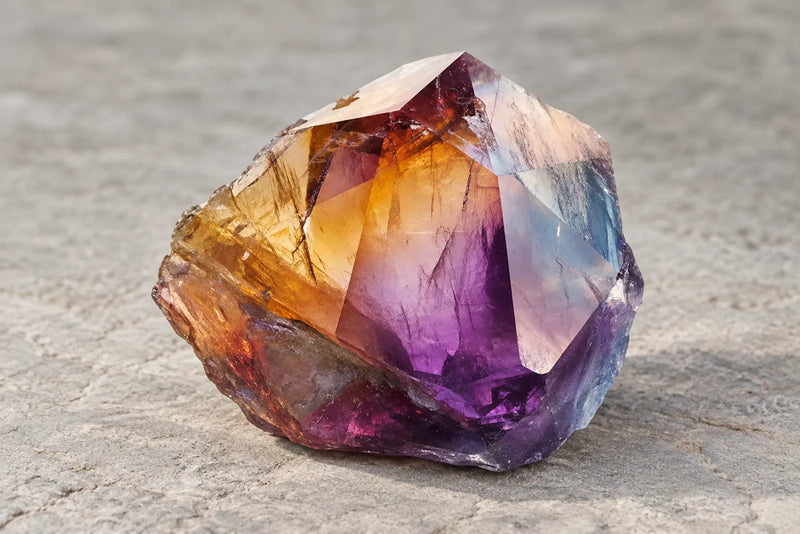
Ametrine combines purple amethyst and yellow citrine colors in the same quartz. A cut that shows both areas clearly gives a very different result from a stone that looks mostly purple from the face-up view. If those names are unfamiliar, our guide explains how the quartz varieties used in jewelry differ.
Opal, labradorite, and tiger's eye: color and light
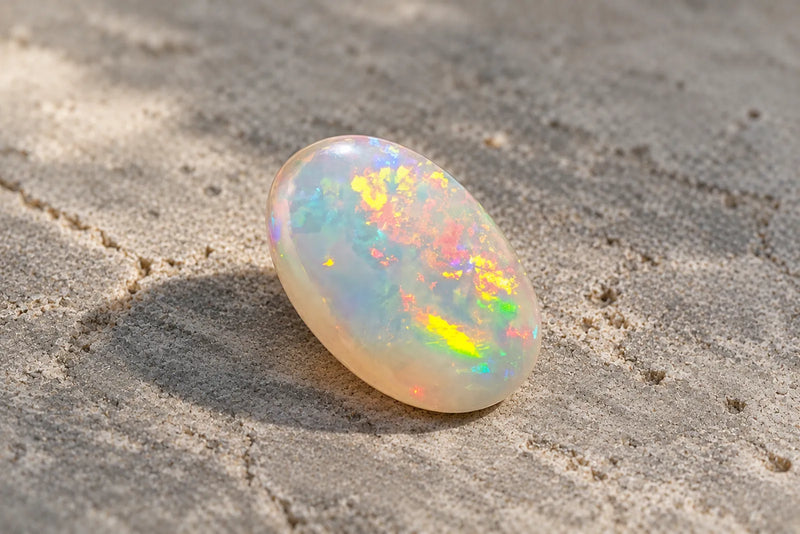
Precious opal shows play-of-color: flashes that can shift as the stone, light, or viewing angle changes. Common opal does not have that effect. A plain pink or white opal is not necessarily missing something it should have.
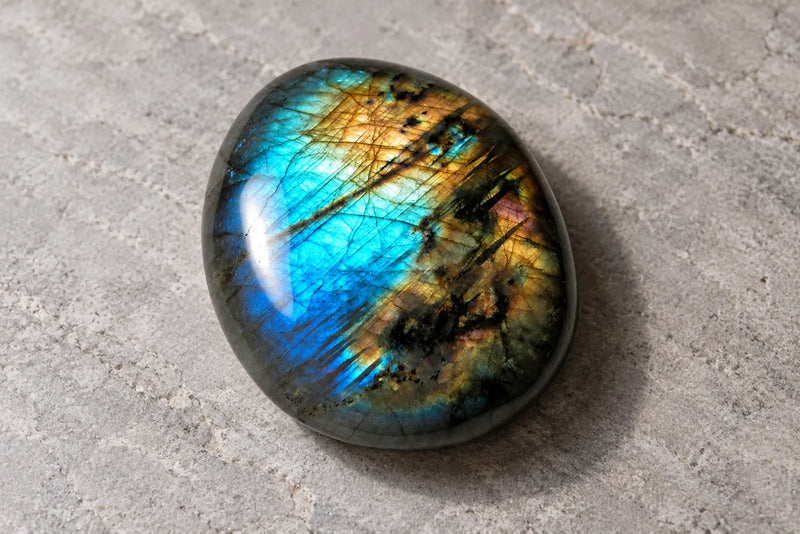
Labradorite can reveal colored reflections called labradorescence. A still photograph may capture a strong flash without showing how the stone looks from other directions. Ask for a short video if that moving effect is the reason you want it.
Tiger's eye offers a quieter kind of movement, with a silky band of light across its golden-brown surface. Our material guide explains the structure behind tiger-eye chatoyancy.
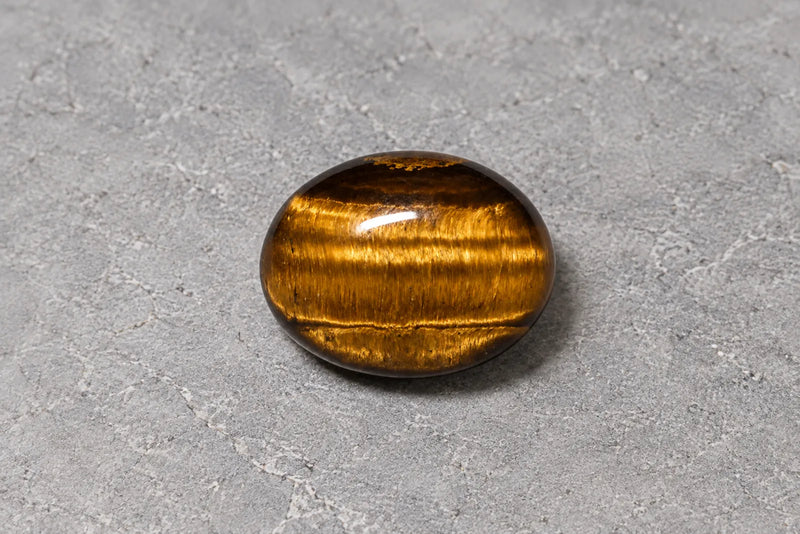
Tiger Eye Bracelet uses natural 4 mm tiger-eye beads on an adjustable cord. Its brown-and-gold palette gives you an example of color with a moving sheen, rather than the sharply separated hues of a purple-and-yellow ametrine.

TIGER EYE BRACELET
Alexandrite: color that changes with the light source
Alexandrite is a color-change variety of chrysoberyl. Fine examples can look green to bluish green in daylight and red to purplish red in incandescent light. That is a different phenomenon from turning a labradorite to catch a reflection.
For a color-change stone, photographs under two identified light sources are more informative than a single dramatic image. Ask what lighting was used and whether the listing shows the actual stone.
What is the most colorful gemstone?
There is no useful single winner without defining what you mean by colorful. Tourmaline offers one of the widest color ranges across a gem family. A watermelon tourmaline can combine contrasting zones in one crystal. Precious opal is an example to consider when you want shifting flashes.
Your preference might be much quieter: pink interrupted by dark veins, or brown with a golden sheen. More colors do not automatically make a stone a better choice for jewelry. Decide whether you want a strong overall hue, a visible pattern, or movement in the light.
Choosing colorful gemstones for men's jewelry
Start with the clothes you reach for most. With navy, gray, white, or olive, try one color you would like to see at the wrist. You do not need to repeat it in your shirt or shoes.
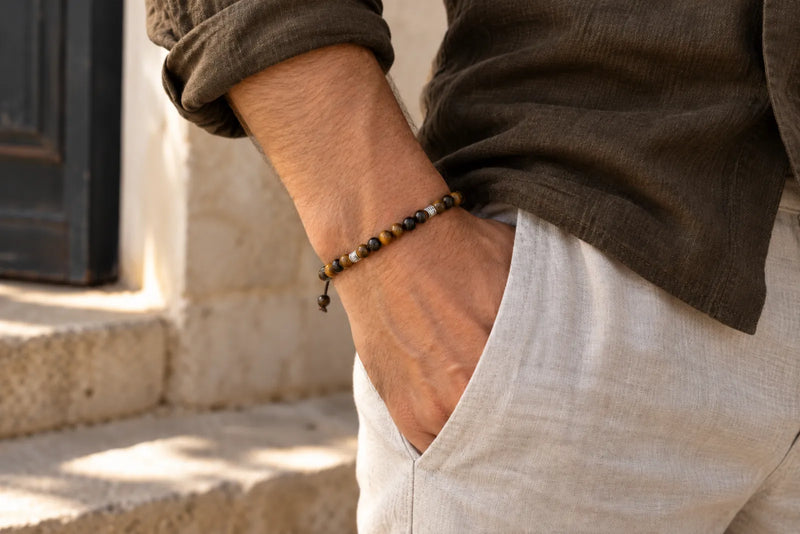
Look at the size of the colored area, too. A close-up of one large stone can make a subtle shade look prominent. Several small patterned beads spread that color differently. Ask for bead dimensions and a photograph of the finished piece at a normal viewing distance.
For a stack, keep one bracelet as the main source of color and let the others add a different texture or a quieter tone. This is a styling starting point, not a rule. If you prefer several strong colors together, compare them as a group before adding more pieces.
Natural color, treatments, and manufactured materials
A natural gemstone may still have a treated color. Heating, dyeing, irradiation, and surface coatings are different processes, and their effects and care requirements vary. Citrine illustrates the distinction: much of the material sold commercially is heat-treated amethyst.
GIA explains how treatments affect a gem's appearance and care. Ask which treatment, if any, applies to the particular piece. A broad label such as natural stone does not answer that question.
Laboratory-grown and imitation also mean different things. A laboratory-grown gem has essentially the same chemical, physical, and optical properties as its natural counterpart. An imitation is another material chosen to resemble a gem. Glass can be attractive without being a natural mineral, and a manufactured pattern can be appealing when it is described clearly.
Multicolor Malachite Man Made uses polished 4 mm manufactured malachite-inspired beads, with blue, green, red, and golden bands on an adjustable nautical cord. It belongs in the manufactured category. Its mixed colors should not be taken as an example of naturally rainbow-colored malachite.

MULTICOLOR MALACHITE MAN MADE
The same care with names helps when browsing lists of multicolored gemstone names. Check whether each entry is a mineral, a variety, an optical effect, or a commercial label. Then ask what the seller is actually supplying. A name that describes an appearance is not a complete material specification.
Choose for wear as well as color
Hardness measures resistance to scratching. Toughness concerns chipping and breaking, while stability concerns responses to conditions such as heat, light, and chemicals. GIA explains why scratch resistance is only part of durability.
For a bracelet, think about the whole construction. The stone, metal details, and cord may need different care. A cleaning method suitable for one component may be unsuitable for another. Follow the maker's instructions for the finished piece; our guide to cleaning a bracelet with several materials covers that practical side.
For the Maresi examples here, remove the bracelets before showering or swimming. Put them on after applying lotions or fragrance, and wipe them with a soft, dry cloth. When comparing loose gems for a custom piece, ask the jeweler which setting and cleaning method suit the specific material and any treatments.
Choose a color you want to wear, then verify the material behind it. A clear description and a useful photograph tell you more than an impressive list of gemstone names.
FAQs
Can you identify a gemstone from its color?
Color can help narrow the possibilities, but several materials share similar shades. Natural, treated, laboratory-grown, and imitation gems can also resemble one another. Ask a qualified gemologist what testing is needed when identity matters; avoid scratch or solvent tests at home.
Does a multicolor bracelet contain multicolored gemstones?
It might, but the terms describe different things. A bracelet can mix individually single-colored beads, use stones with several colors in each bead, or combine manufactured materials. Read the description at bead level rather than relying on the overall palette.
Does a brighter gemstone cost more?
Not automatically. Color is one consideration alongside the material, size, clarity, cut, treatments, and other quality factors. Compare like with like. A vivid manufactured bead and a natural faceted gem serve different purposes and should not be priced as though they were the same material.

Save 20%
Coordinated pieces, ready to wear.

Up to 15%
Pick any 3 or 5 bracelets.
From a customer
★★★★★
“Still wearing it two months later.”
Nick Verified · Sicily set


