

What is Murano glass? It is glass made on Murano, the island near Venice known for its glass workshops. The name tells you where a piece was made, not which color or technique it uses. This guide explains how Murano glass is made, what its marks can tell you, how to assess an origin claim, and where millefiori fits.
Look at glass beads with visible millefiori cane patterns: you can see the pattern in the bead, but you still need a maker or provenance record to know where the glass came from.
Consider Maresi's Millefiori Bracelet: the flower-like patterns are easy to spot. The workshop that made its glass is not. A pattern can describe a bead beautifully without saying a word about its birthplace.

MILLEFIORI BRACELET
What Is Murano Glass?
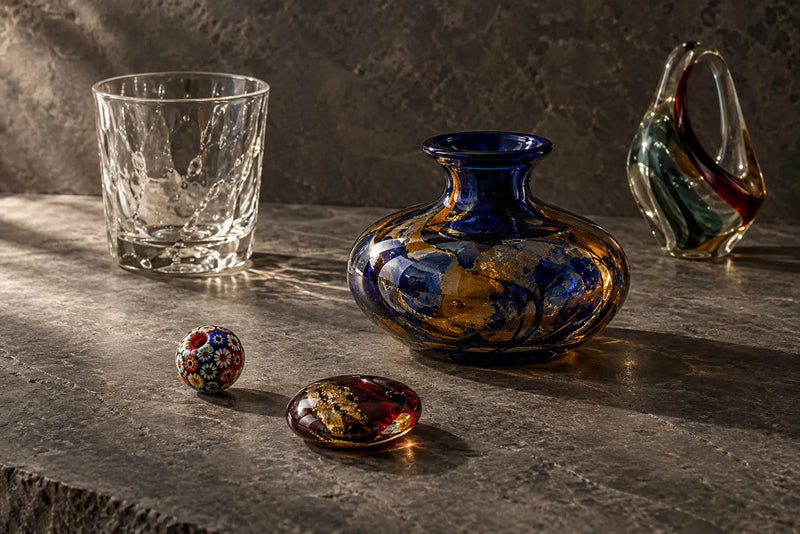
Murano glass is a place-based description. A clear drinking glass, a patterned vase, and a tiny bead can all qualify if made on Murano. No single color, shape, or decoration defines it. A photograph of a bright, swirled object cannot settle the question of origin.
Murano is part of the Venetian Lagoon. Its workshops have made delicate vessels, mirrors, beads, and large decorative pieces. If you are shopping for jewelry, ask the same question a collector would ask about a vase: who made the glass, and where?
Where Is Murano Glass Made?
Authentic Murano glass is made on the island of Murano in Italy. A piece made elsewhere in Venice may be Venetian glass, but it is not Murano glass. A piece made outside Italy in a Venetian style is not necessarily Italian. Place names matter when a seller uses them to describe an object's appearance.
The label “Made in Italy” narrows the country but does not identify the island or the workshop. Likewise, a flower pattern on a bead can suggest a technique without telling you where the bead came from.
How Is Murano Glass Made?
The process depends on the object. For a blown vessel, a glassworker gathers molten glass, shapes it with tools and breath, adds any decoration, then cools it carefully to reduce stress. Other objects are cast, fused, cut, engraved, or worked at a flame. A bead and a blown bowl do not follow the same sequence.
Venetian glassmakers developed distinctive ways to use clear and colored glass, including fine filigree. A similar effect on a piece made elsewhere would not prove Murano origin.
Millefiori uses small cross-sections of patterned canes. Making the canes and fusing their slices into an object is different from simply coloring a finished surface. Our article on how patterned glass canes create millefiori designs follows that process in more detail.
What Makes Murano Glass Special?
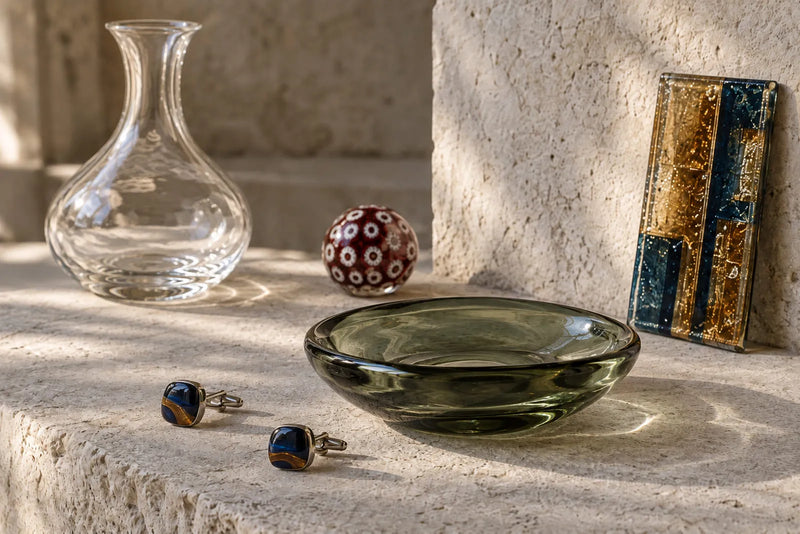
A glassworker may make a vessel so thin it feels startlingly light, or build up dense layers of color in a sculptural piece. Filigree places fine lines of glass within a form. Sommerso puts color beneath clear layers. Murrine create miniature patterns. These are possibilities, not a checklist every Murano object must satisfy.
Styles have changed over the centuries. A plain, well-proportioned object may be as deliberate as an elaborate one. A complicated pattern is also possible outside Murano. Craft and origin are separate questions.
Is Murano Glass Always Marked?
No. Some pieces carry a maker's signature, a paper label, a retailer's label, or the official Vetro Artistico Murano mark; others have no surviving mark. Labels can come off, and older pieces predate the current regional trademark. An unmarked piece needs more research, but a missing sticker by itself does not make it a fake.
The same goes for the glass in Maresi's Millefiori Bracelet Silver. Its patterned beads and silver-colored details are easy to see; the beads' place of manufacture isn't. Read what a label actually identifies before treating it as proof of Murano production.

MILLEFIORI BRACELET SILVER
The official mark is more specific than a generic “Murano” sticker. The Veneto Region's Murano origin mark may be used by authorized producers after checks, and its label identifies a licensed maker. Still, ask the seller to connect the mark to the piece. A receipt or certificate helps when its details can be checked.
How to Identify Authentic Murano Glass
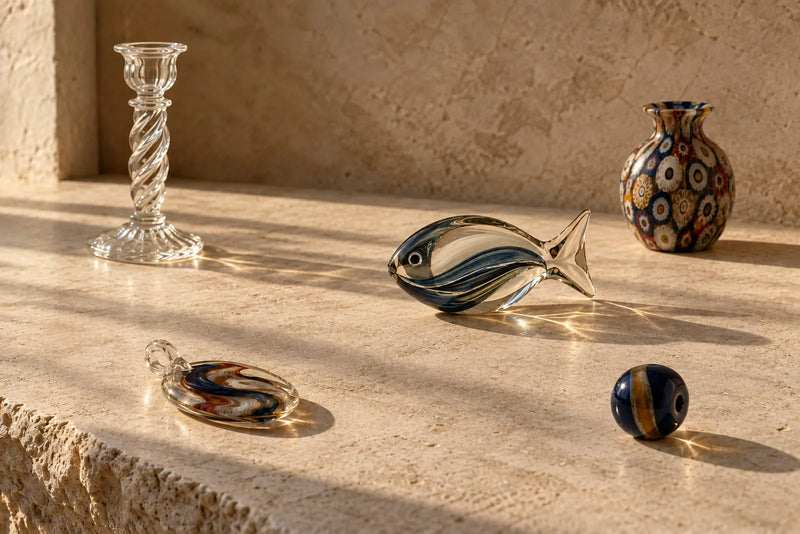
There is no reliable one-glance test. Color, weight, bubbles, or a polished base may suggest how glass was worked. None can establish the address of the furnace. Makers elsewhere use similar techniques, and Murano pieces can be simple or unsigned.
Work from the strongest evidence outward:
- Ask for the producer. Get the workshop or maker's name, not just “Italian glass.” Check its connection to the object.
- Check any official label. If the piece bears the Vetro Artistico Murano mark, verify the producer's identification number against the Veneto Region's licensed-producer list, linked from its mark page above. A shop window displaying the logo is not the same as a marked object.
- Keep the paperwork. A dated receipt, original packaging, or catalog entry can connect an origin claim to the object. Vague certificates offer less.
- Use appearance as supporting evidence. Compare form, construction, finish, and signature with documented work by the proposed maker. If the object is valuable or the attribution is uncertain, seek a specialist's assessment before paying a collector's price.
These steps can raise or lower confidence; visual resemblance cannot become proof. “Murano style” describes a look. “Made in Murano” is a production claim and deserves evidence.
Is Murano Glass Valuable?
It can be, but Murano origin alone does not set a price. A documented work by a sought-after maker may command much more than an ordinary decorative piece. Condition matters too: chips, repairs, missing components, and uncertain attribution can change what a buyer will pay. Size and difficulty of execution may affect the original cost without guaranteeing resale value.
If Maresi's Millefiori Bracelet catches your eye, judge it on its pattern, fit, stated materials, and condition. Its price cannot establish a Murano origin or be compared fairly with a documented collector's piece.
MILLEFIORI BRACELET
If you want to know what one piece is worth, compare recent sales of genuinely comparable objects rather than asking prices for vaguely similar listings. Look for records that name the maker, period, size, condition, and provenance. For an inherited or unusually expensive piece, an independent appraisal is more useful than a quick guess from a photo.
Murano Glass Versus Venetian Glass
Venetian glass is the broader term for glass associated with Venice and its glassmaking tradition. Murano glass points to production on Murano itself. A Murano piece belongs within the Venetian tradition, while “Venetian” does not by itself confirm Murano manufacture.
There is another wrinkle: glassmakers carried Venetian methods to other places. A vessel made in a Venetian style outside the lagoon can show the influence of that tradition without having Venetian or Murano origin. Read “Venetian style” as a description of design unless the seller supplies a production history.
Murano Glass Versus Millefiori
Murano describes origin; millefiori describes a decorative approach. A Murano glassworker may use millefiori, but the technique is practiced elsewhere. Those colorful little flowers can be beautiful, yet they cannot tell you where an object was made.
The related word murrine usually refers to slices of patterned glass cane or elements made from them. Usage varies among glassmakers and museums. The Glass Museum's explanation of murrine shows how patterned rods are drawn, cut, and incorporated into larger work. You do not need to master every term to shop carefully: separate what you can see in the glass from what a seller claims about its birthplace.
Millefiori and Murano Glass Bracelets
Bracelet listings often blur these terms because a cluster of flower-like beads looks unmistakably “Murano” to many shoppers. The visible pattern supports a millefiori description. It does not make a bracelet Murano glass jewelry unless the beads' origin is documented.
For jewelry, look at the patterns, finish, fit, and stated materials. Ask a separate question if you want beads made on Murano: who made them, and what documentation follows them? Our guide to what to check when choosing patterned glass beads goes deeper on the visible details.
FAQs
What is Murano glass?
Murano glass is glass made on the island of Murano near Venice, Italy. It can take many forms, including vessels, mirrors, beads, and jewelry components. Its origin is the defining point. Colorful decoration, an Italian-sounding name, or a millefiori pattern alone does not establish that an object was made there.
Where is authentic Murano glass made?
Authentic Murano glass is made on Murano. Venice has a wider glassmaking history, so “Venetian glass” is not automatically a claim that a piece came from the island. If a seller advertises Murano origin, ask for the maker and production evidence. A “Made in Italy” label names the country, not the workshop.
How can you tell whether Murano glass is real?
Start with the maker, any official mark, and documents that connect the item to a Murano workshop. Then compare its construction and signature with documented examples. Appearance can support an attribution, but bubbles, weight, color, or a polished base cannot prove where the furnace stood. For a costly piece, ask an independent specialist.
Is Murano glass always signed or marked?
No. Some pieces have a signature or a label, and others are unmarked or have lost their labels. The official Vetro Artistico Murano mark can help trace a licensed producer, but its absence does not automatically disqualify a piece. If there is no mark, other evidence of maker and origin becomes more important.
Is millefiori the same as Murano glass?
No. Millefiori refers to patterned glass made with decorative cane elements; Murano identifies a place of production. The two descriptions can apply to the same object when a documented Murano maker uses millefiori. They are not interchangeable. A flower-like pattern cannot show whether the glass was made on Murano or elsewhere.
Why can Murano glass be expensive?
Some pieces require extensive skilled work, and documented objects by sought-after makers can attract collectors. Price also depends on design, condition, rarity, and provenance. There is no standard “Murano glass price” that fits every bead or vase. For a particular object, compare verified sales of similar pieces rather than relying on an asking price.
Look Beyond the Pattern
What is Murano glass? Glass made on Murano, regardless of whether it is clear, layered, blown, or patterned. To judge a specific piece, follow the evidence back to its maker. Enjoy millefiori for its intricate designs, but let documentation, not decoration, support any claim of Murano origin.

Save 20%
Coordinated pieces, ready to wear.

Up to 15%
Pick any 3 or 5 bracelets.
From a customer
★★★★★
“Still wearing it two months later.”
Nick Verified · Sicily set


