


Seed bead bracelet ideas can start with a slim black strand, a navy-and-ivory repeat, or a few small daisies. For more texture, try a narrow woven band; for a coordinated pair, repeat the same colors in different proportions. The 15 designs below give you a palette and a detail to look for, with options for simple stringing as well as beadwork.
Compare the proportions of finished seed-bead styles in the Maresi collection before choosing a width. The Loreto Seed Bracelet uses 2 mm black seed beads on an adjustable cord. Its single-color strand is a useful starting point if you want the bracelet to sit beside a shirt cuff without adding another pattern.

LORETO SEED BRACELET
Choose a seed bead bracelet design
Start with the part you want to notice: the color, a small motif, or the texture of a band. A fine red strand makes color the main feature. A flower chain draws attention to its outline. Woven beadwork gives you a wider surface for geometry.
| Look | Construction | Loom needed? |
|---|---|---|
| Solid color, alternating colors, blocks or ombre | Single-strand stringing | No |
| Daisies or tiny cherries | Needle-and-thread motifs | No |
| One initial | Stringing with a larger focal bead | No |
| Two connected strands | Two rows attached to one closure | No |
| Diagonal band | Woven beadwork, such as peyote stitch | No for peyote |
| Diamond band | Rows woven on a bead loom | Yes for this version |
For a first project, choose a strung design with a repeat you can check at a glance. If you already enjoy working with a needle, the motif and woven options offer more detail. Matching pairs and stacks are ways to combine finished bracelets, so they can use designs you already have.
Simple seed bead bracelet ideas
1. A slim black strand
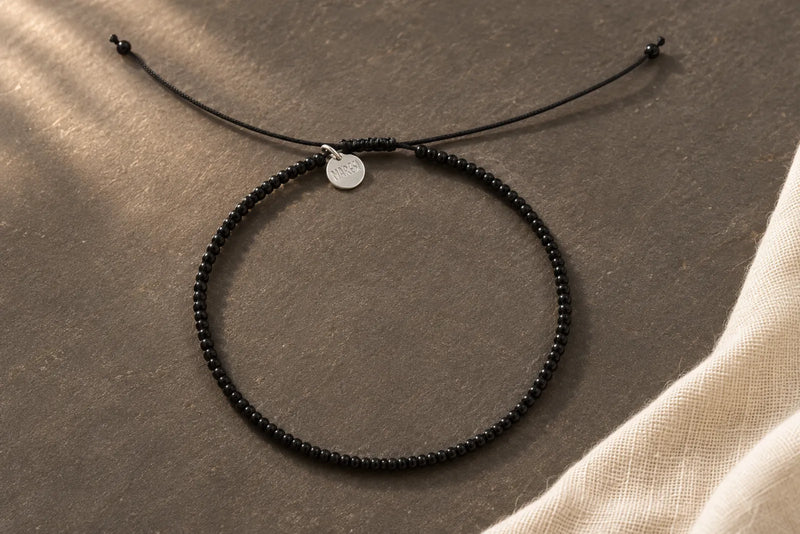
A single row of black beads keeps the shape of the bracelet clear. Try glossy beads if you want small points of reflected light, or choose a matte finish for a flatter surface. Keep the beads consistent in size so the line stays even.
This is an easy place to begin when you wear mostly black, gray, or white. Before adding anything else, compare the strand on its own with the same strand beside your watch. You may prefer the simpler arrangement.
2. One fine line of red
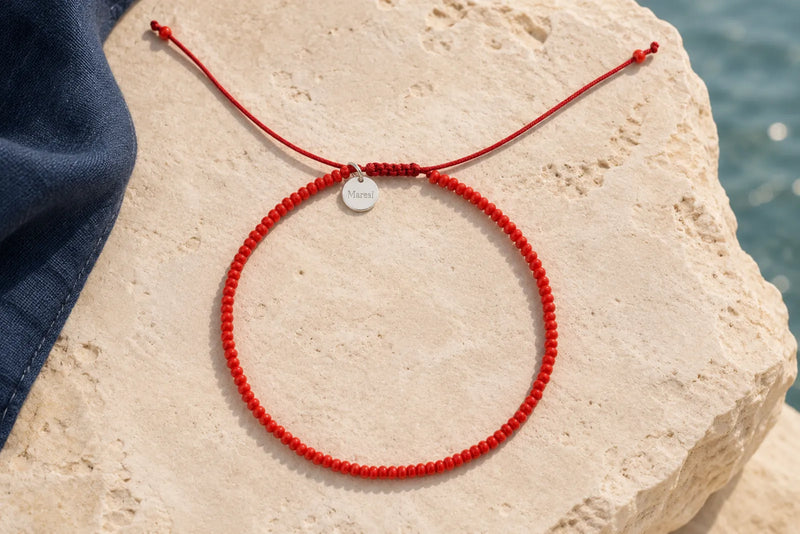
Red gives a narrow bracelet a clear presence against navy or denim. Use one shade throughout and let the small bead size keep the color contained. A red cord continues that line; a darker cord makes the closure a separate detail.
For an outfit with little color, try the bracelet as the only red element. If your shirt already has a red stripe or small print, compare the two shades together before choosing your beads.
3. Mottled turquoise glass
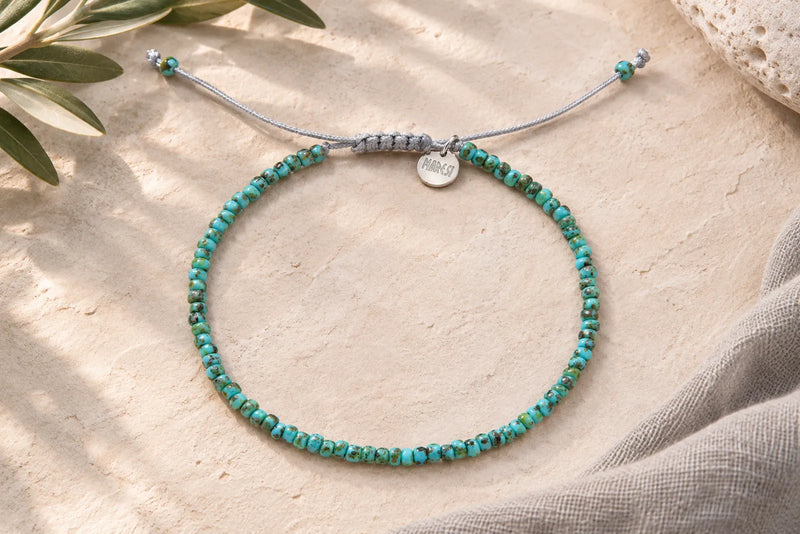
A mottled finish puts variation inside the beads themselves. Turquoise with darker flecks gives a plain strand more surface detail while keeping one overall color. The look comes from the glass bead finish; a speckled appearance does not make the beads natural stone.
A gray cord and a plain sleeve leave the mottled surface visible. You can see the changes between neighboring beads without adding another repeating pattern.
4. A navy-and-ivory repeat
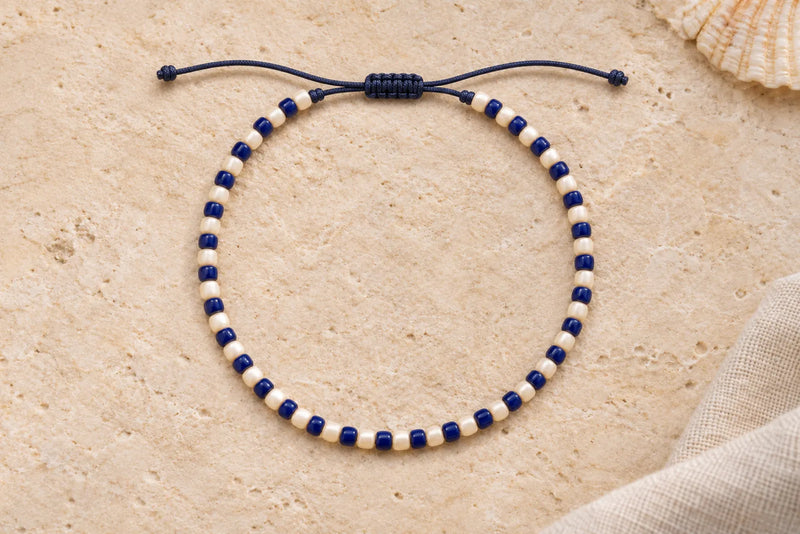
Alternate one navy bead with one ivory bead for a small, regular rhythm. Choose both colors in the same size and shape. The contrast makes a doubled color easier to spot while you are arranging the strand.
For a darker version, try three navy beads followed by one ivory bead. Lay out a short sample of each repeat before committing to a whole bracelet. The palette stays the same, but the amount of ivory changes the effect.
5. Earthy color blocks
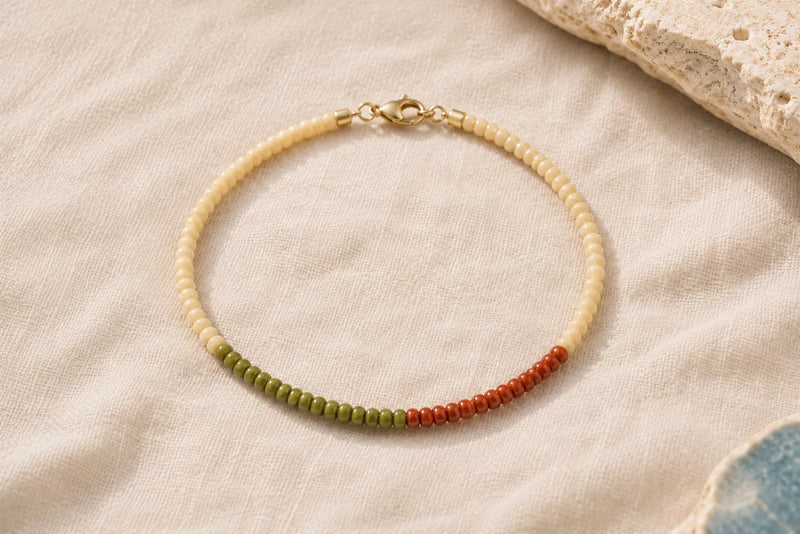
Sand, olive, and rust work well as separate blocks. Try a long sand section with shorter olive and rust sections near the front. Using the same seed bead shape across all three colors keeps the blocks connected visually.
Unlike the alternating design, this version has stretches where one shade dominates. Check where the blocks fall when the bracelet curves around your wrist. A section that looks balanced in a straight line may sit mostly underneath once worn.
6. A tonal ombre strand
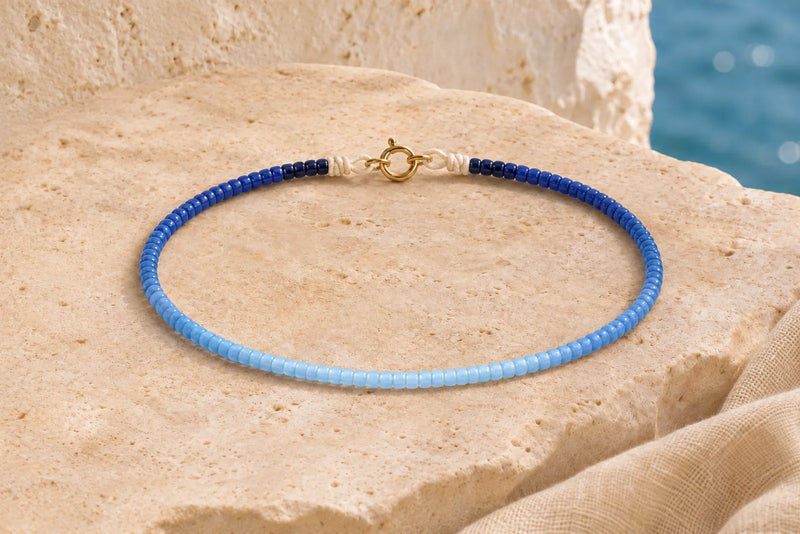
Arrange several blues from dark ink to pale blue, then reverse the order around the other side of the bracelet. More intermediate shades make the changes less abrupt. Keep each section short enough that several shades remain visible together.
Lay the beads out in daylight before stringing. If two neighboring blues look almost identical, move them apart or remove one. A tonal bracelet needs enough difference between shades for the progression to read.
7. A single metallic accent
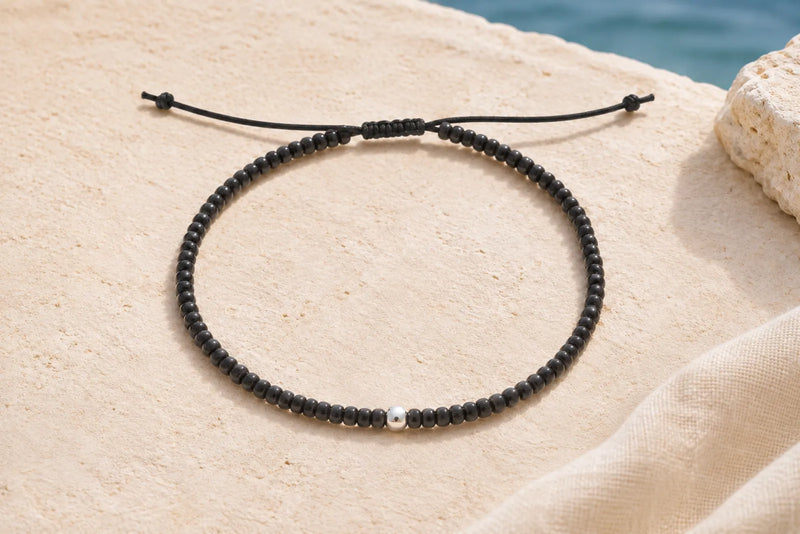
Place one small silver-tone spacer among charcoal seed beads to give the strand a focal point. Choose an accent close to the beads' width if you want it to stay subtle. A much larger spacer will change the outline as well as the color.
Check the whole loop with that one accent in place. If you prefer several, space them with a consistent run of seed beads between each. Enough plain beadwork between the spacers will keep the metallic details distinct.
Motifs and extra detail
8. Small daisy motifs
Ivory petals with muted blue centers make a clear flower shape. Separate the flowers with plain sand-colored seed beads so each daisy has its own outline. Short gaps create a continuous floral chain; longer gaps leave more of the plain strand visible.
These flowers are stitched from individual beads. When choosing a reference, look closely at the petals: a single flower-shaped component produces a different result. Make one sample flower to check its shape before repeating it along the bracelet.
9. Tiny cherry details
Small dark-red cherry motifs stand out against an ivory strand. A few spaced details keep the bracelet light, with enough plain beads between them to see the fruit shape. Use green sparingly around the stems so it stays part of the motif.
Try positioning the cherries across the visible front section, leaving the underside plain. This makes their placement a design choice instead of scattering them wherever the repeat ends.
The Treviso Seed Bracelet offers a simpler way to use that red accent. Its 2 mm red Miyuki glass beads form a continuous strand on an adjustable nautical cord. Choose a plain line of red when you like the palette but want to leave out the fruit detail.

TREVISO SEED BRACELET
10. One initial, kept small
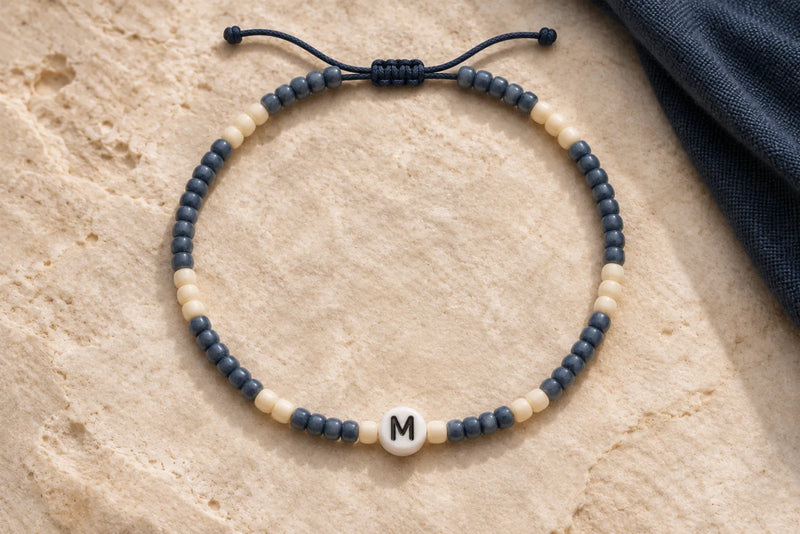
One letter bead gives a slim strand a personal detail without needing a whole name. Place it among muted blue and ivory seed beads, with the same short sequence on either side. The surrounding symmetry helps the larger bead look deliberate.
Check the letter bead's hole as well as its face. It needs to work with the stringing material chosen for the smaller beads. Keep the letter readable when the strand curves, and avoid crowding it with several other focal pieces.
11. Two strands, one closure
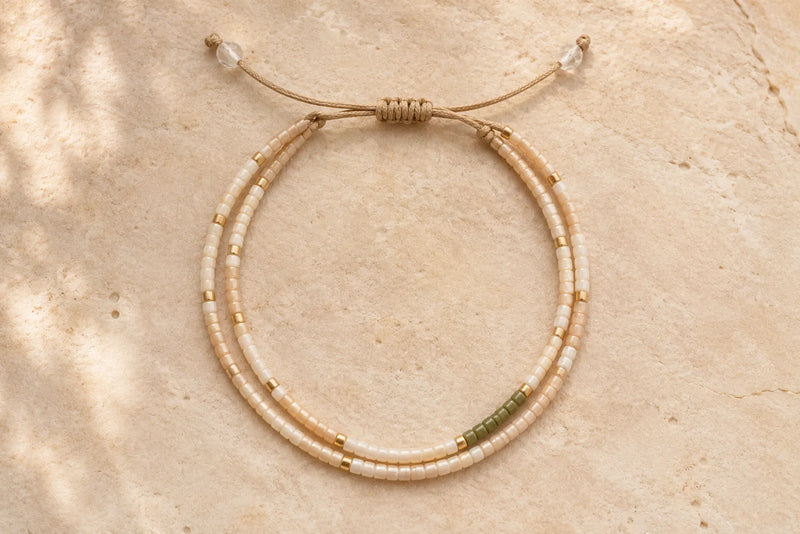
A connected double strand gives you two rows within one bracelet. Try sand-colored beads on both rows, then add a small olive block to just one. The slight difference lets you see the separate strands.
Both rows meet at a shared closure, which distinguishes this design from wearing two separate bracelets. Plan their lengths together and check how they sit side by side. The closure and attachment method belong in the making plan from the start.
Woven seed bead bracelet designs
12. A narrow diagonal band
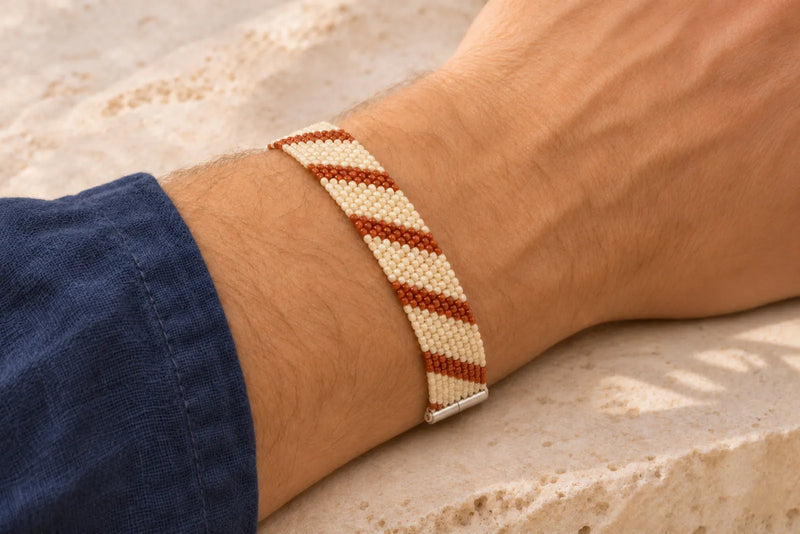
A diagonal stripe carries color across several bead rows. Try rust lines against a cream background, leaving enough cream between stripes to keep the direction clear. A narrow band gives the geometry room to show while keeping the bracelet restrained.
This look needs woven beadwork. Peyote stitch is one way to make a band without a loom, but its staggered rows need a chart designed for that stitch. Choose the construction before choosing a chart; the finished stripe alone does not tell you the thread path.
13. A small diamond loom band
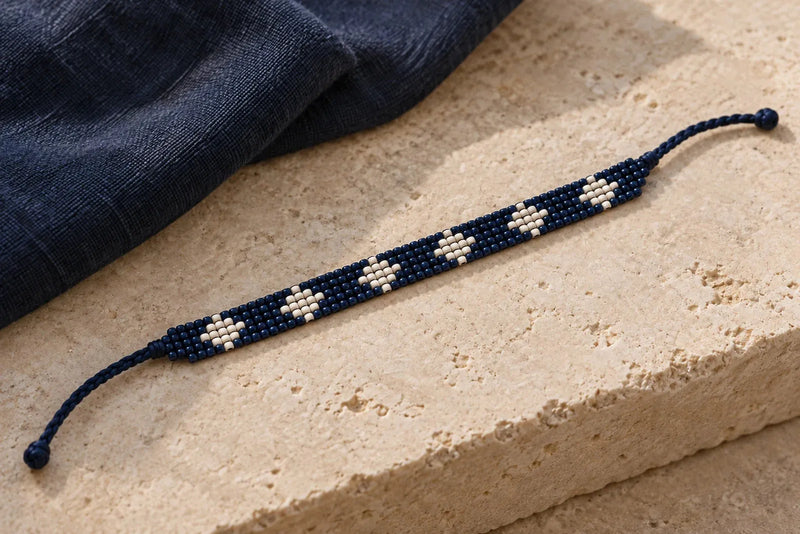
Ivory diamonds against navy make a compact geometric band. In the narrow version used in our patterns guide, five columns give each diamond a small, clearly defined shape. Keep the background consistent so the repeated motif stays easy to follow.
Compare the band laid flat with its curve around a wrist. Leave complete diamonds across the visible section, and account for the ties or clasp when deciding the length. A loom chart sets the bead order; the finishing method determines how that beadwork becomes a wearable bracelet.
Matching pairs and bracelet stacks
14. A matching pair with reversed colors
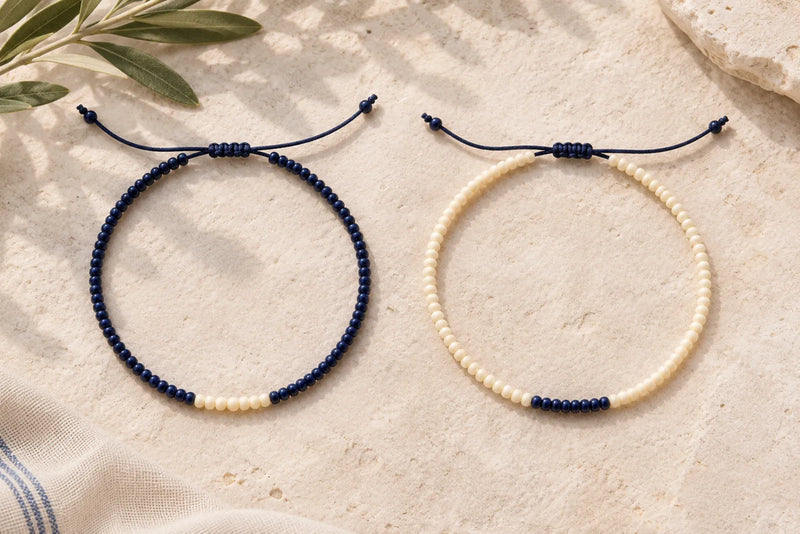
Make one strand mostly navy with a short ivory block, then reverse those proportions for the second. The shared colors connect the bracelets while leaving each one recognizable. Keep their bead size and block lengths similar if you want a closer match.
These are two separate bracelets with independent closures. Wear them together or divide the pair between two people. Reversing the dominant shade also lets each person choose the version closer to the colors they usually wear.
The Paros Picasso Seed Bracelet shows another way to add variation within a coordinated palette. Its 2 mm Miyuki Picasso-finish beads have a mottled turquoise appearance, paired with gray cord. Use that surface texture as a reference when a plain solid color feels too uniform.

PAROS PICASSO SEED BRACELET
15. A coordinated three-bracelet stack
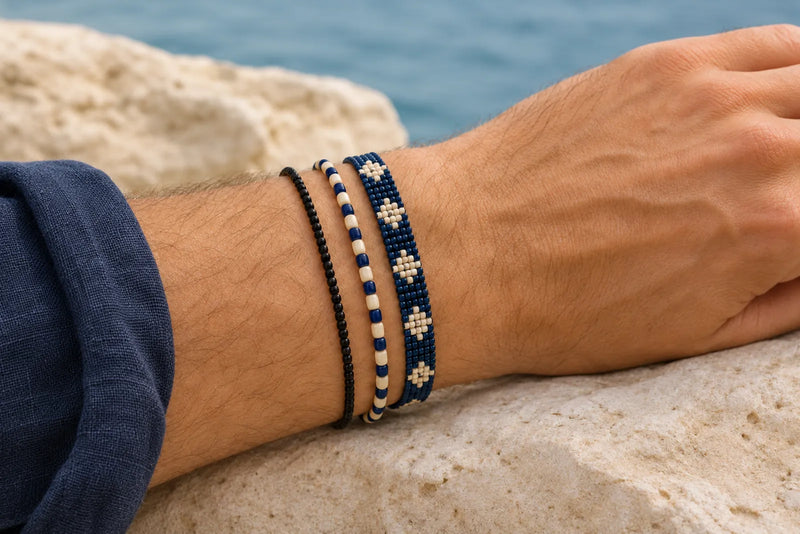
Combine a plain black strand, a restrained two-color strand, and a narrow geometric band. Keep one color running through at least two of the pieces so the stack has a visible connection. Let the band carry most of the pattern.
Start with two bracelets and add the third only if you still like the spacing. Beside a watch, check where the closures sit and whether the band remains visible. If you want to mix in cord or other materials, explore bracelet designs beyond seed beads for a wider comparison.
Seed bead bracelet color ideas
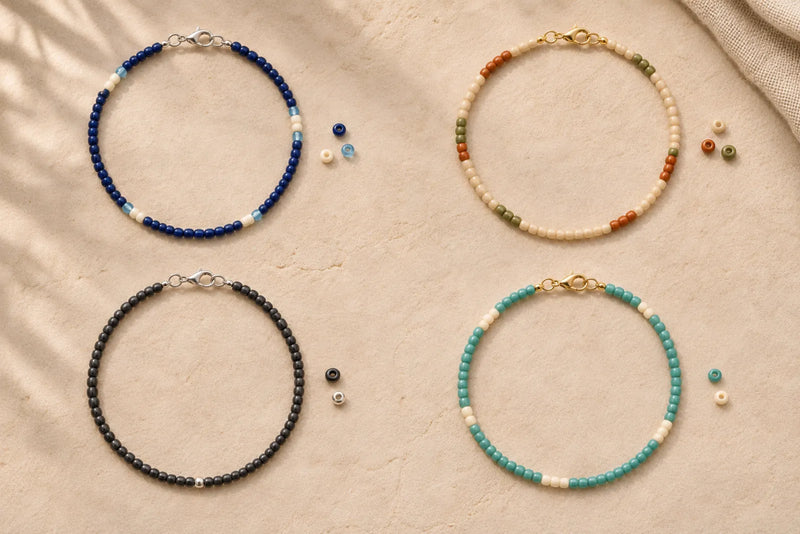
Choose a dominant shade first, then decide how much contrast you want. These glass seed bead bracelet ideas use the same small scale with different color proportions:
- Navy and ivory, with a little blue: use navy for most of the strand and ivory for a short repeat.
- Rust, sand, and olive: let sand take the longest section, with the other shades in smaller blocks.
- Charcoal and silver-tone: keep almost the whole bracelet dark, with one metallic point.
- Muted turquoise and cream: use cream as a small break between longer turquoise sections.
For a softer aesthetic, bring the shades closer together in lightness. For a pattern you can read from farther away, try a darker background against a pale motif. Compare short samples against a shirt you actually wear.
Before you make your chosen design
Check which seed-bead shapes suit your design before buying supplies. Small rounded beads and cylinders create different surfaces, even when their size labels match. Keep shape and size consistent within a repeat unless the design deliberately calls for a change.
Test the actual cord or thread through your beads, allowing for any repeated passes. Include the closure when checking length. Elastic needs an appropriate knot finish; follow its manufacturer's directions for adhesive and curing, and avoid using a crimp as its finish.
When you are ready to make a strand, daisy chain, or loom band, our patterns guide has the bead order and finishing steps for those three projects. Choose one short sample before making the full bracelet.
Seed bead bracelet FAQs
What size seed beads should I use for a bracelet?
Match the size and shape to the project. For scale, MIYUKI lists round 8/0 beads at approximately 3 mm, round 11/0 at approximately 2 mm, and Delica 11/0 cylinders at approximately 1.6 mm. Check the manufacturer's hole dimensions too. Two beads labeled 11/0 can have different shapes and proportions.
What is the best string for seed bead bracelets?
Use stringing material suited to the construction. Stretch cord works for a stretch strand; stitched flowers need fine beading thread and a compatible needle. Choose thread intended for loom work for the diamond band. Test the required passes through a bead before starting.
How many seed beads do I need?
Make and measure a short repeat with your actual beads. Divide the intended beaded length by that repeat's length to estimate how many repeats you need, then count the beads in each. For example, if your own 10-bead sample measures 3/4 inch, a 6-inch beaded section would need about 80 beads. Calculate the beaded section separately from the closure. Keep extra beads for finishing and corrections, and round motif designs to complete repeats.

Save 20%
Coordinated pieces, ready to wear.

Up to 15%
Pick any 3 or 5 bracelets.
From a customer
★★★★★
“Still wearing it two months later.”
Nick Verified · Sicily set


