


Cream colored gemstones are gems with pale, warm body colors. Pearl, cream moonstone, some white jade and light chalcedony are familiar examples; opal and jasper can also show creamy tones. Mother of pearl offers a similar appearance in shell. To choose between them, look at what catches your eye: an even pale color, a moving glow, or cream mixed into a darker pattern.
Maresi's Mother of Pearl Bracelet puts that shell luster into polished 4 mm beads, with silver-plated alloy details and an adjustable yellow nautical cord. The cream surface catches light differently from a plain, opaque bead, even at this small scale.

MOTHER OF PEARL BRACELET
Cream and beige gemstone names
Cream describes an appearance, so it can lead you to several unrelated materials. The table separates the pale stones and organic gem materials from faceted options closer to yellow or champagne.
| Name | The appearance you might choose it for | A detail worth checking |
|---|---|---|
| Pearl | Cream or ivory body color with a soft luster | Body color, overtone, natural or cultured origin, and treatments |
| Cream moonstone | A warm background beneath a floating reflection | Whether the sheen appears as the stone moves |
| White jade | A pale, smooth look that may lean creamy | The actual jade material, treatment and bead-to-bead tone |
| Light chalcedony or agate | A cloudy pale surface, sometimes with bands | Transparency, pattern and color treatment |
| Opal | A pale body, sometimes with shifting rainbow flashes | Common or precious opal, treatment and assembled construction |
| Picture jasper | Cream and beige broken up by brown markings | How much pale color remains across the whole piece |
| Mother of pearl | Creamy shell with iridescent reflections | Clear identification as shell nacre rather than a pearl |
| Pale yellow sapphire | Faceted sparkle toward the yellow edge of the palette | Actual color, natural or laboratory-grown origin, and treatment |
| Light brown diamond | A transparent, warmer champagne or brown appearance | Actual color, origin and any color treatment |
Those last two can suit a warm neutral palette, but they will not look like a creamy pearl. Compare actual stones instead of expecting the color names to match.
Cream is warmer than a cool white, while beige usually suggests more tan or brown. These are useful descriptions with loose boundaries. For the broader distinction between white-looking material and transparent stones, see our guide to white and colorless gems.
Choose the surface you want
Two bracelets can be almost the same color and still look quite different. Before deciding on a material, compare the way its surface handles light.
A glow that moves
Cream moonstone has a body color beneath its adularescence, the light that seems to drift inside the stone. A photograph taken at one angle can make that reflection look much stronger than it does from another. A short video gives you a better sense of the effect.
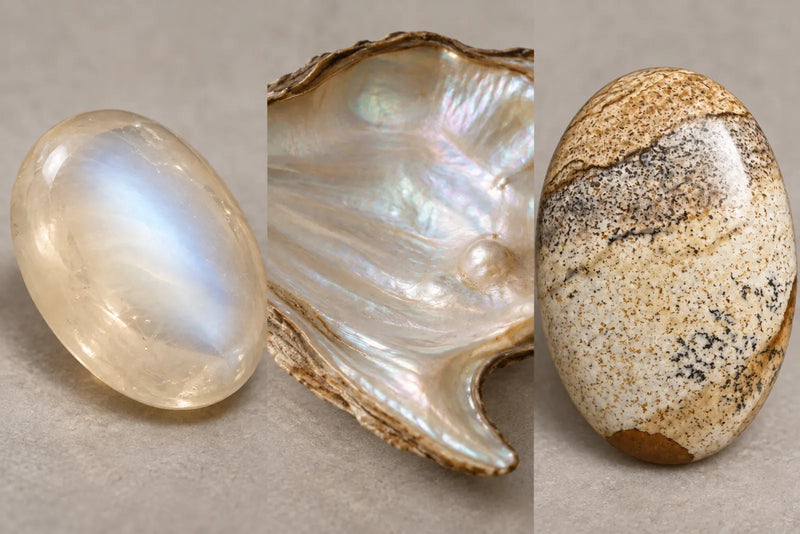
Pearl has a different kind of luster. Its main body color can be cream while an overtone adds pink, green or another cast. Mother of pearl has layered shell nacre and its own shifting reflections. These are different materials, even when a seller photographs them in a similar shade.
Opal offers another distinction. Precious opal shows play-of-color, the changing flashes associated with the gem; common opal does not. A pale opal can be genuine without a rainbow display. Ask what type you are looking at before comparing two prices.
A quieter, more even finish
If you want the pale color itself to be the main feature, compare jade with light chalcedony. Jade can vary in translucency and tone; chalcedony often has a cloudy or waxy appearance. Agate may add bands to that softer-looking surface.
Check more than one bead. A strand with small changes in tone can look very different from a bracelet selected for an even color. Neither result is automatically better; it depends on whether you want a continuous pale line or visible variation.
Cream within a pattern
Picture jasper brings cream into a mixture of beige, brown and darker markings. Some beads show broad pale areas; others carry more lines or patches. Look at the balance across the bracelet rather than judging it by a single attractive bead.
Maresi's Picture Jasper Bracelet uses polished 4 mm beads and an adjustable nautical cord, with beige, brown and cream tones across the stone. The darker pattern breaks up the pale color without taking over the piece.

PICTURE JASPER BRACELET
For a closer look at that material, explore the patterns found in picture jasper. If your preferred shade is moving further toward sand, honey or chocolate, compare pale tan stones and darker brown varieties.
Faceted sparkle in nearby shades
For a ring or a small pendant, you may prefer facets to a smooth bead or cabochon. Pale yellow sapphire and light brown diamond offer warmer transparent options. They sit near the cream palette, with a different visual effect from opaque or pearly material.
Ask to see the particular stone face-up and from the side, and request its origin and treatment disclosures. A broad name such as champagne is not enough information to compare two gems.
Match the material to the jewelry
A cream stone in a pendant usually faces less contact than one worn on a finger or wrist. Think about where the jewelry will meet desks, tools, cuffs or other pieces.
For a frequently worn bracelet, jade and chalcedony are worth comparing for toughness. Jade's interlocking structure gives it considerable resistance to breaking, while chalcedony is also a tough jewelry material. Drilled holes, cracks, cord and fastenings still affect the finished piece.
Moonstone needs more protection from impact because it has cleavage directions along which it can break. Pearl has a soft surface that scratches readily, and opal also needs care against scratching and knocks. A protected setting or a less exposed piece may suit these materials better.
For a ring you intend to wear often, sapphire and diamond are useful options to discuss with a jeweler. Both resist scratches well, although a hard stone can still chip. GIA's explanation of gemstone durability separates scratch resistance, toughness and stability, which is more useful than choosing from a hardness number alone.
Check the shade before you buy
When comparing cream gemstones online, ask to see the actual color. Four checks help:
- See the piece against a neutral background in daylight, then under indoor light.
- Ask whether the photographs show the actual item or a representative example.
- View the whole bracelet or strand, as well as a close-up of its surface.
- For moonstone, pearl, shell or opal, look at it in motion so a single reflection does not decide the purchase.
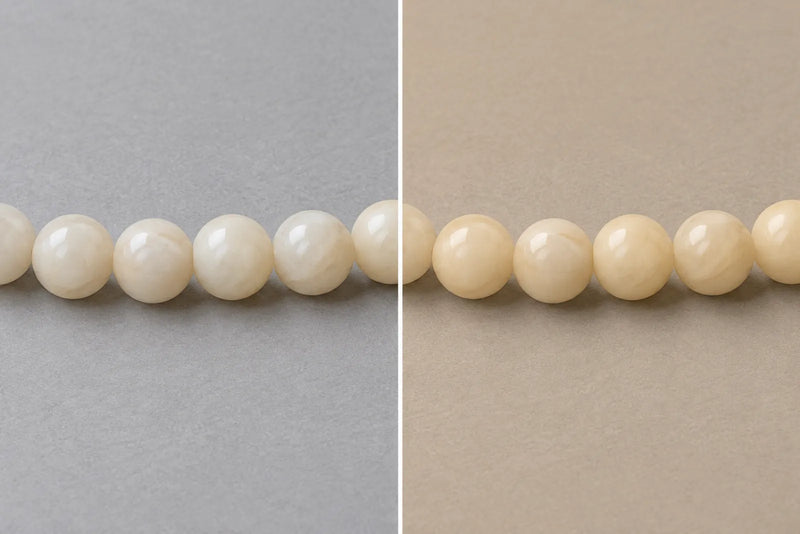
Warm lighting can make a pale stone look more yellow. Brown props can also make it harder to judge where cream ends and beige begins. If you are trying to match a bracelet you already own, send the seller a clear reference and ask how close the available piece is. Treat a photographic match as an estimate.
Wear cream stones with everyday clothes
Against navy or charcoal, a pale bracelet gives the wrist a clear point of contrast. With an ecru shirt or a sand-colored overshirt, a similar tone can keep the look quieter. Use texture to make that tonal combination interesting: shell reflects light, while jasper gives you visible markings.
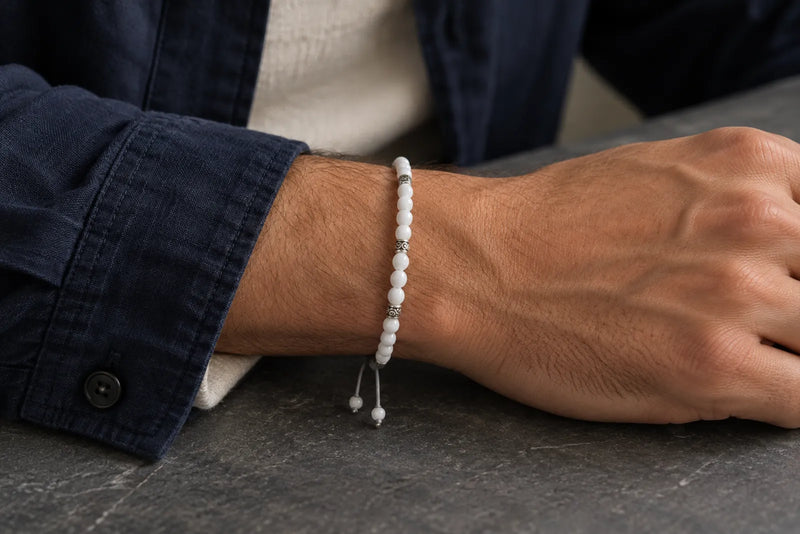
Maresi's White Jade Bracelet pairs polished 4 mm beads with a sliding-knot nautical cord. It offers a pale comparison for this kind of outfit; check the available bead tone if you specifically want cream, since the product name alone does not promise it.

WHITE JADE BRACELET
If you are choosing a second piece, compare stone bracelets with varied bead textures and repeat one color already in the first. Try the combination on with your usual sleeve length. A bracelet that sits neatly beside a rolled cuff may feel crowded beneath a closer-fitting shirt.
Keep harder beads or metal edges from repeatedly rubbing against a softer pearl or shell surface. When bracelets keep knocking against a watch, wearing them on separate wrists is an easy adjustment.
Care for the whole piece
Cream-colored jewelry has no single cleaning method because the materials differ. Wipe cultured pearls with a very soft cloth after wear, and keep perfume and harsh chemicals away from them. Moonstone and opal need protection from high heat and sudden temperature changes. Avoid ultrasonic and steam cleaning for pearls, moonstone and opal.
Follow the maker's instructions for a corded bracelet, including its metal finish and any adhesives or treatments. A cleaning method suitable for a loose stone may be unsuitable for the finished piece. Store pieces separately so they do not scrape against each other.
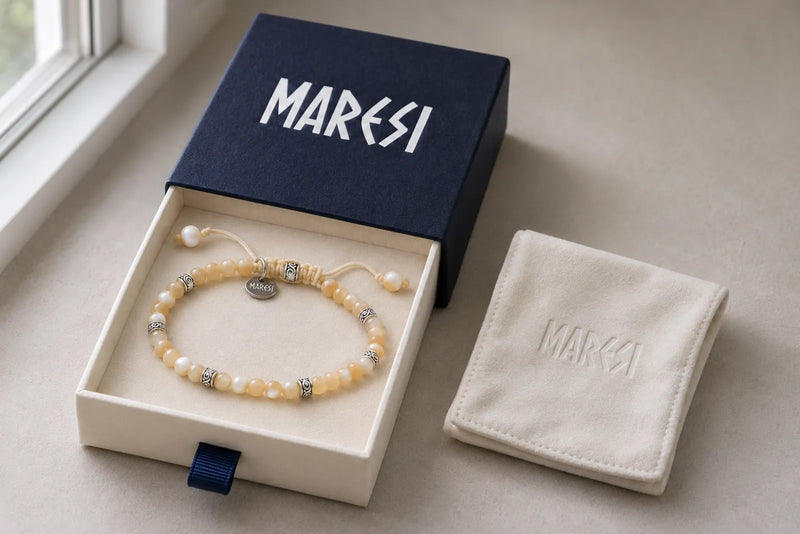
Before buying, get the material name and care instructions in writing. That gives you something more useful to keep than a label that says only cream or beige.
FAQs
Does a cream color mean the gemstone is natural and untreated?
No. Natural gems may be treated, and laboratory-grown or imitation materials can also have pale warm colors. Ask separately about the material, its origin and any treatments. A color description does not answer those questions.
Does ivory-colored jewelry contain ivory?
The color description alone does not tell you the material. In this guide, ivory refers to a pale warm shade. A pearl, shell bead or pale stone should still be identified by its actual material name in the listing.

Save 20%
Coordinated pieces, ready to wear.

Up to 15%
Pick any 3 or 5 bracelets.
From a customer
★★★★★
“Still wearing it two months later.”
Nick Verified · Sicily set


