


Zebra jasper is known for contrasting stripes, bands, and patches, often in black, white, gray, cream, or brown. The name describes a stone’s appearance, but sellers do not always use it for the same material. That distinction matters when identifying a specimen, comparing colors, or choosing how to clean it.
For an example of the pattern in finished beads, see our black-and-white stone design.
What is zebra jasper?
In gemstone descriptions, zebra jasper usually refers to striped or strongly contrasting material. Its markings can be narrow and regular, broad and wavy, or broken into uneven patches. A small polished piece may show only part of a larger pattern.
Jasper itself is a dense form of chalcedony, a variety of quartz. Mineral inclusions contribute to its colors. However, the word “jasper” also appears in commercial names for other decorative stones. Fire Mountain Gems includes zebra “jasper” among its examples of how marble is labeled in the bead trade.
A stone can therefore be natural without being jasper in the geological sense. When composition matters, look for a specific material description rather than relying on the striped appearance.
Raw zebra jasper vs polished stone
Raw zebra jasper is material before it has been shaped and polished. Its surface may be uneven, and the pattern can look less distinct than it does on a finished piece.
Cutting exposes a new surface through the stone. Polishing smooths that surface and can make the contrast easier to see. The difference is especially noticeable when a rough specimen has a dull exterior but clear bands inside.
“Raw” describes the finish. It does not, by itself, establish the stone’s composition, source, or rarity. A polished specimen can be natural too.
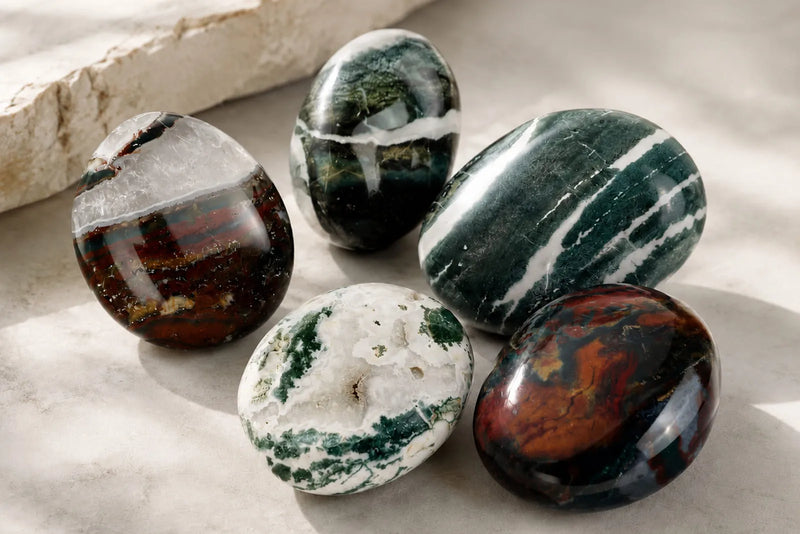
Zebra jasper colors and patterns
Color names help describe appearance, but they are not reliable mineral classifications. For a broader view of the family, our guide to common types of jasper explains other familiar names.
Black and white
This is the combination most closely associated with the zebra name. Dark bands may cross a white or cream background, with gray areas softening the contrast. Some pieces have distinct stripes; others show waves or patches.
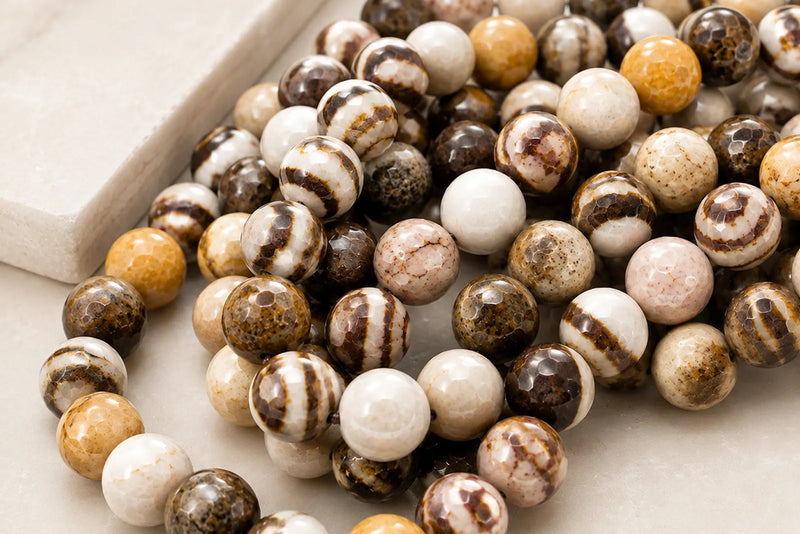
Brown zebra jasper
Brown zebra jasper descriptions often include tan, cream, beige, and darker brown markings. The contrast can be gentler than in black-and-white examples, especially where the bands blend into cloudy areas.
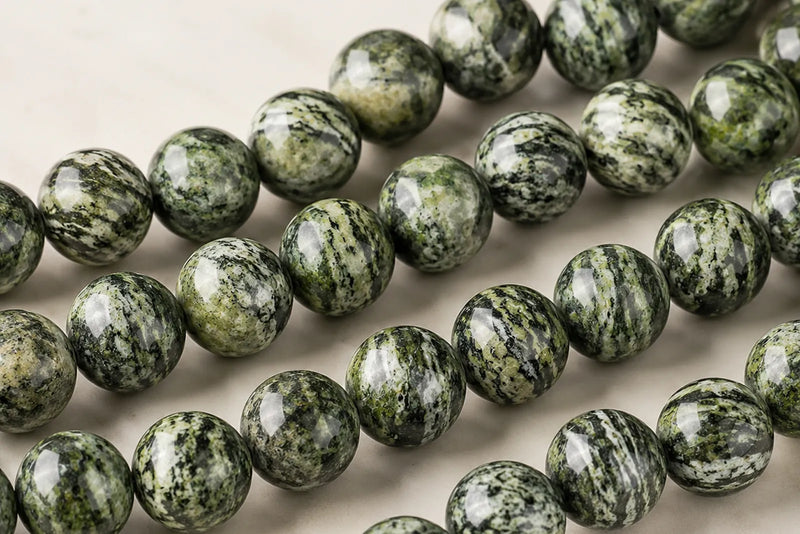
Green zebra jasper
Material sold under this name may have green, gray, white, or dark bands. Sellers use the green label for materials they identify differently, so the color name alone cannot confirm what a particular piece is made of. Check the description supplied with that specimen.
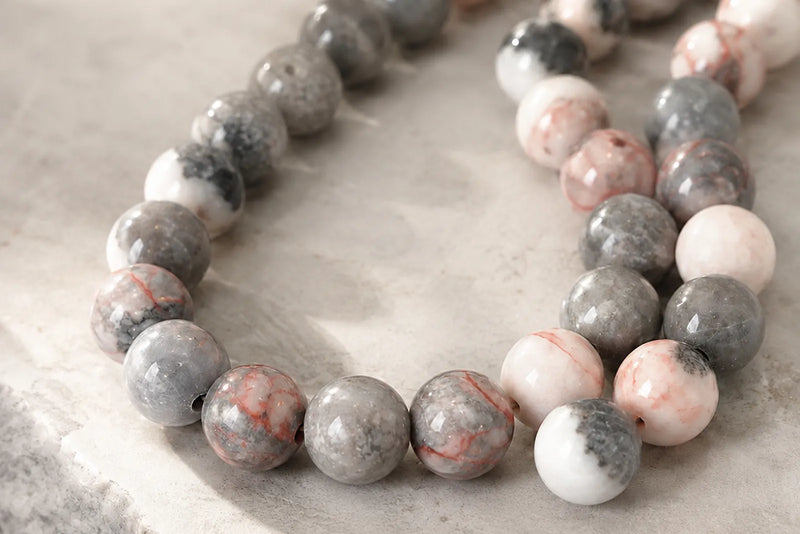
Pink zebra jasper
Pink versions are commonly described with cream, gray, white, and darker vein-like markings. We cover that comparison separately in pink and classic zebra jasper compared.
Physical properties: what the name can tell you
Jasper is generally listed at about 6.5 to 7 on the Mohs hardness scale. That is a measure of scratch resistance. It does not mean a piece cannot chip, and it does not establish whether prolonged soaking is appropriate.
Apply that hardness range to material identified as jasper. A different stone sold under a similar trade name may need different care. A glossy surface, striped pattern, or familiar color cannot settle that distinction.
Is zebra jasper rare?
Stones sold as zebra jasper are available as beads, tumbled pieces, cabochons, and carvings. The name alone does not establish rarity. A specimen with clear markings or an attractive finish may stand out visually without being geologically scarce.
If a particular piece is described as rare, ask what makes it rare: its documented source, size, pattern, or another specific feature. A broad trade name is not enough to explain the claim.
What affects zebra jasper value?
For decorative pieces, much of the appeal comes from the visible pattern and the quality of the work. Compare similar sizes and finishes before drawing conclusions from price.
- Pattern: Look at how the bands or patches sit across the visible surface. Strong contrast and softer markings offer different looks.
- Condition: Check for chips, open cracks, and damaged edges.
- Finish: A smooth, even polish should reveal the pattern without rough patches.
- Description: A clearly identified material and disclosed treatments give you more useful information than a color name alone.
How to assess a material description
Start with what the seller actually states. Does the listing identify the material beyond its trade name? Does it say whether the color is natural or treated? If an origin is claimed, is that information specific to the piece?
Photographs help you judge appearance and visible condition. They usually cannot confirm composition or rule out treatment. Ask for clearer information when those details matter, rather than treating a striped pattern as proof.
Can zebra jasper go in water?
Cleaning should follow the identified material and any treatments. For confirmed jasper, brief cleaning with lukewarm water, mild soap, and a soft cloth is commonly recommended. Dry it afterward. That advice should not be extended automatically to every stone sold under the zebra name.
For finished jewelry, also follow the maker’s instructions for cord, metal, adhesives, and settings. Brief cleaning and prolonged immersion are different conditions. Remove pieces before swimming or showering when the maker advises it.
Routine cleaning and storage
Use a soft cloth for light surface dust. When wet cleaning is appropriate, keep it gentle and avoid household cleaners. Store polished pieces separately so they do not rub against harder objects.
GIA’s advice on cleaning colored stones explains why material identification and treatments matter when choosing a cleaning method. If either is uncertain, ask a jeweler before using steam or an ultrasonic cleaner.
Frequently asked questions
Does every piece need clear stripes?
No. Material sold under the name may show broken bands, waves, or patches. The cut also affects how much of the larger pattern is visible on a small piece.
Does polishing mean the stone has been dyed?
No. Polishing changes the surface finish; dyeing changes color. A polished appearance alone does not show whether a stone has received a color treatment. That information should come from the material description or an appropriate examination.

Save 20%
Coordinated pieces, ready to wear.

Up to 15%
Pick any 3 or 5 bracelets.
From a customer
★★★★★
“Still wearing it two months later.”
Nick Verified · Sicily set


